Recently I got an email from someone who publishes on Substack – someone I like and admire – and at the bottom of the email she recommended some other people with what I think she called “great Substacks”.
And that’s a generous thing to do, no doubt about it. But it made me feel slightly depressed, and I wrote something down to understand why.
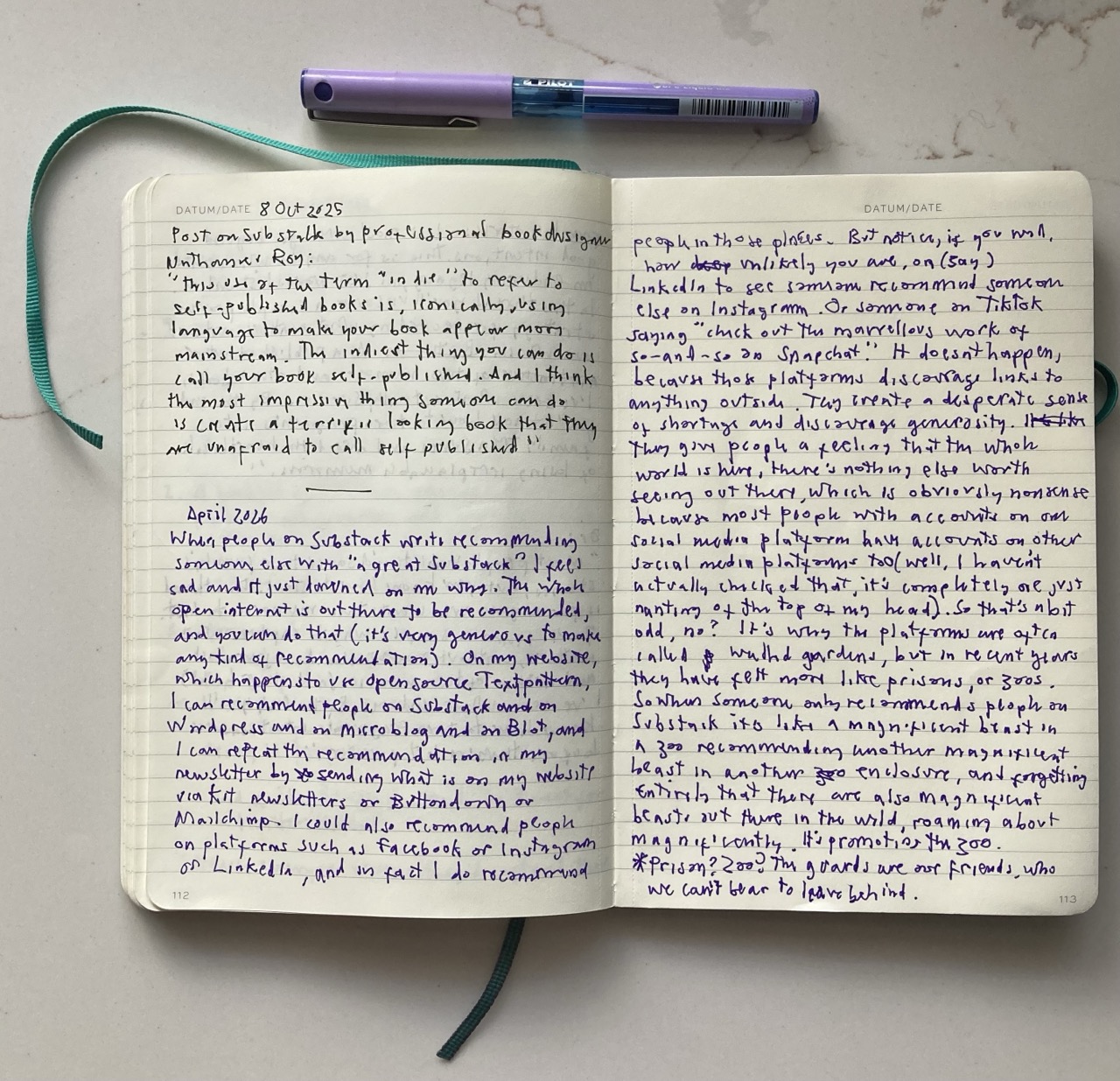
There’s a whole internet out there to be recommended, an open web that you can link to from anywhere.
On my website, which happens to be built on open-source Textpattern, I can recommend people who happen to publish on Substack, Ghost, Wordpress, Microblog, Blot and more.
I can repeat the recommendation by sending out what I published on my website via my Kit, Buttondown, Mailchimp, Brevo (I’ve used all those) or other newsletter platforms.
In fact I can also recommend people to follow and read on platforms such as Facebook or Instagram or LinkedIn etc, and I do recommend people on those places occasionally.
But this isn’t just about what I can recommend. It’s also about what I can enjoy myself, regardless of the platform.
For several years I’ve been reading the web through an RSS reader1. Mine is called NetNewsWire2, and it sits on my phone. In it I have feeds from people who publish on Substack, and on Ghost, and on plain old personal websites. I even have a feed of my wife’s posts on Instagram3.
They all sit together in the same list, indifferent to which platform generated them.
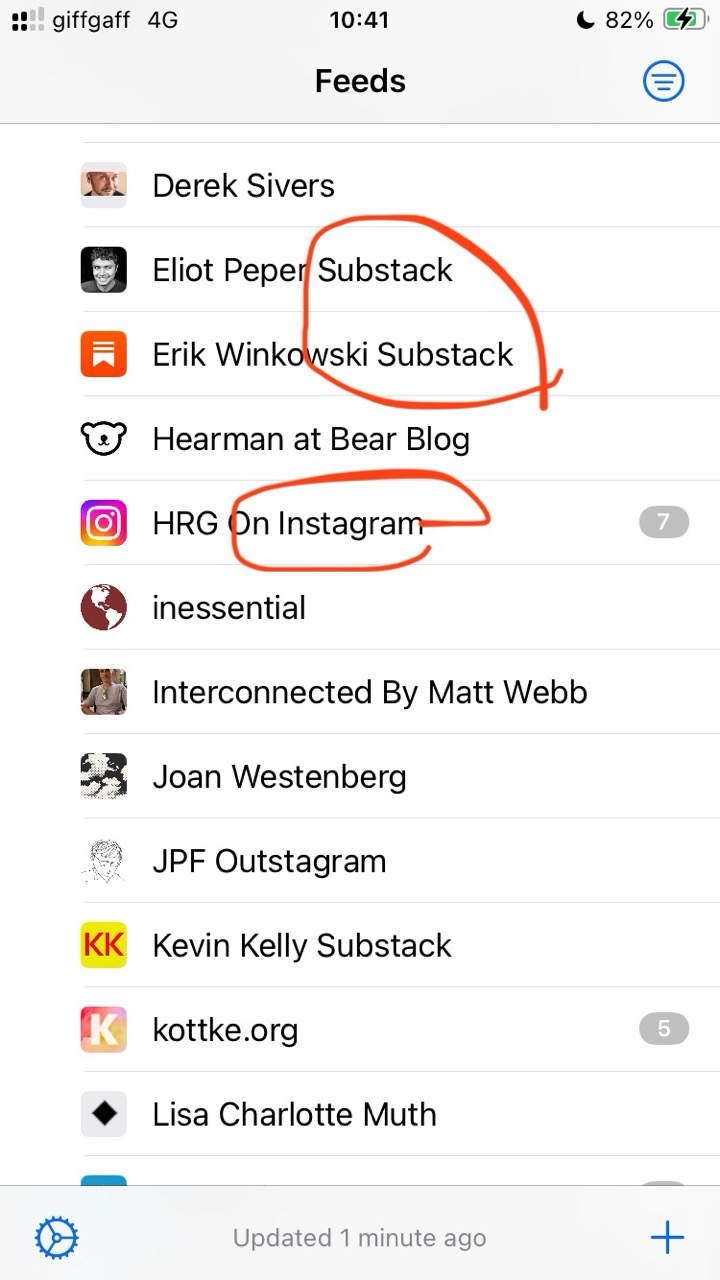
I find this genuinely delightful.
But notice, if you will, how unlikely it is to read someone on Instagram recommending someone else on Instagram, or a person on TikTok saying “check out the marvellous work of so-and-so on Snapchat”. It doesn’t happen, because those platforms are built on scarcity, and they discourage generosity. Consciously or not, users act as if the whole world is here and there’s nothing of interest out there. Which is obviously nonsense, because most people with an account on one social media platform have accounts on other social media platforms too. (Well, I’m completely making that up, I have no evidence, this is just me ranting off the top of my head.)
Bit odd, no? It’s why the platforms are often called walled gardens.
But in recent years some people (me, anyway) have started to experience these once-fun places as more like prisons4, or zoos. So when someone on Substack only recommends people on Substack it feels just a little teeny bit like a magnificent beast in a zoo recommending another magnificent beast in a different enclosure, forgetting entirely that there are also magnificent beasts out there in the wild, roaming about, magnificently.
It’s recommending the zoo.
1 RSS. Stands for Really Simple Syndication – a format that lets you subscribe to websites and read their new posts in one place, without visiting each site separately. Most publishing platforms support it, whether they advertise the fact or not. It has existed since the late 1990s and the open web would be poorer without it.
2 NetNewsWire. A free, open-source RSS reader for Mac and iPhone, made by Brent Simmons. Download it here. If you’re curious what the Today and All Unread views look like in practice, here’s a screenshot from my own phone.
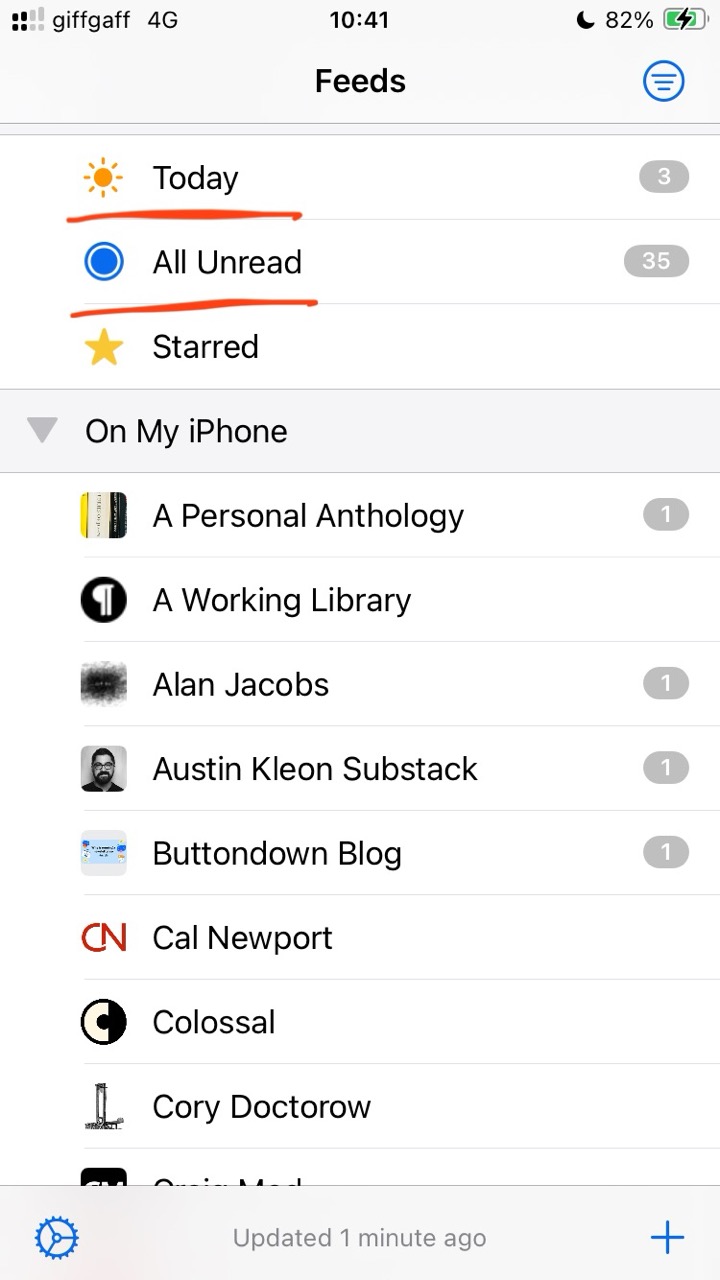
3 Instagram and RSS. Instagram doesn’t officially support RSS, but a service called Bye, Doom generates a feed from any public account. I imported my wife’s – and there she is, in my reader, next to everyone else.
4 More like prisons. Cory Doctorow: “platforms don’t ‘hack your dopamine loops’ – they just take your friends hostage.”
-
If you enjoyed this post, please consider sharing it by email or on social media. Here's the link. Thanks, JPF.