15 February 2026
Previous Newsletter | NextHello – and a big warm hullooo to new subscribers.
In this issue: a reminder about Unoffice Hours, a demonstration of ukelele playing by a Stoic philosopher, and the latest from the Department of Flintoff Banging On About Platforms Again.
But first:
STORIES PLEASE!

I’m looking for stories about people’s first great breakthrough as readers, AND about how so many of us have started to find it hard to concentrate on reading – fiction especially. Please, if you have ever considered yourself a keen reader, reply to this email with answers to these two questions:
- What written fiction (of any kind) first turned you into a reading fiend?
- Have you noticed that it’s harder to read fiction these last few years (if so, please elaborate)?
👉 This is for a very worthwhile project, so please take a second to send your stories.
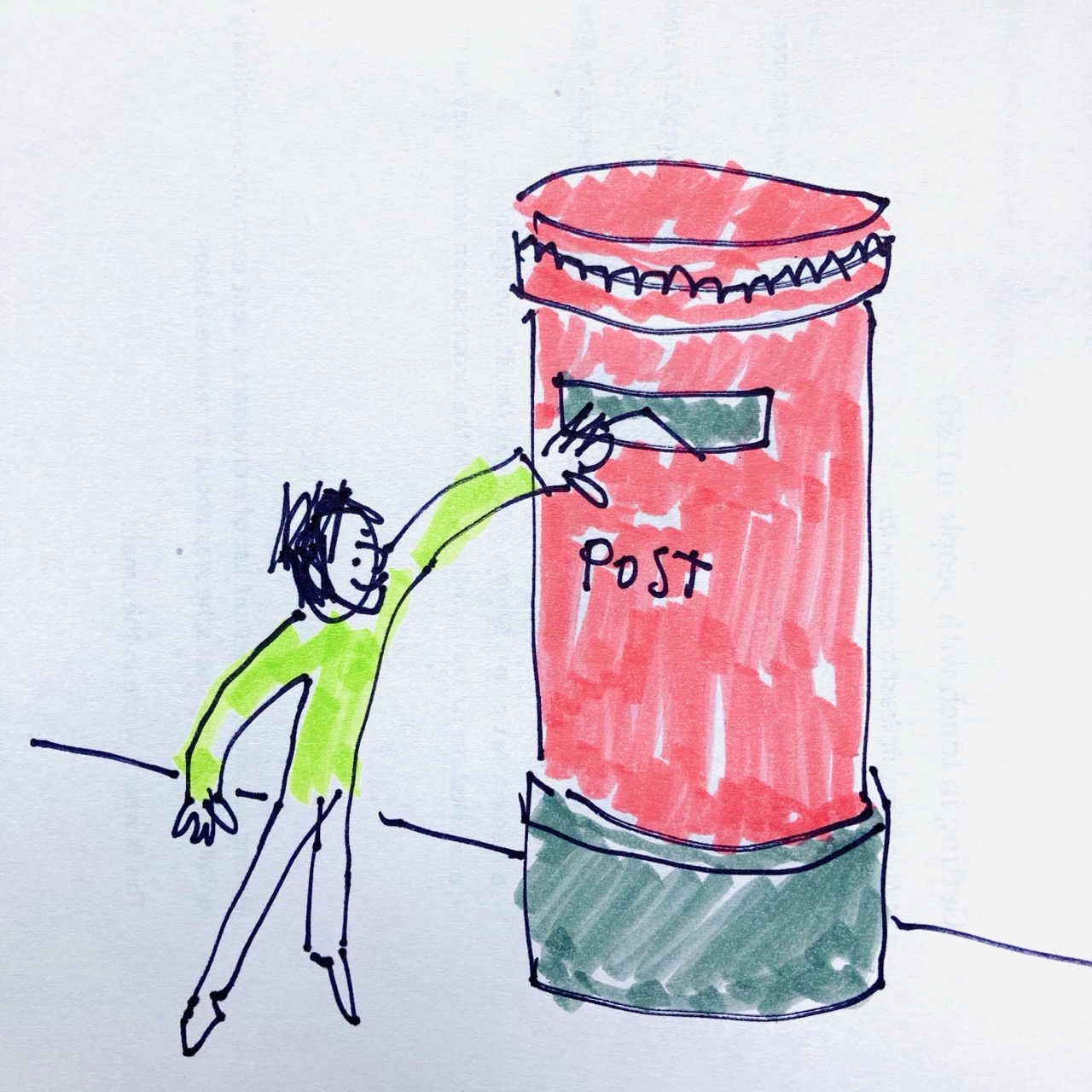
Note: The picture above was drawn by me (yes!) and appears in my book Psalms for the City, which is available in all good bookshops (by definition).
A (Still Quite) New Thing: Unoffice Hours
- I’m opening up my calendar for 1-to-1 Zoom calls with anyone who chooses to book the time. That could be you! We can talk about work, compare notes about an idea, or whatever. Anything.
One 30 minute slot each week. Wednesdays, lunchtime UK.
Gratifyingly, the slots have started filling up, and I’ve enjoyed the conversations so far. The format is VERY open. Last week we agreed happily that it had not been productive, just a pleasure.
The Instagram Artist Problem [Outstagram]
And not just an Artist problem
Recently I did something a tiny bit obsessive. I opened Instagram and made a screen recording of everyone I follow who has the word “art” in their username. Like this:

Following, following, following.
Watching all those names fly past, I realised something uncomfortable: I have no idea how to find most of these people outside Instagram.
(Statement of the obvious: this applies to nearly everyone I follow on Instagram, not just artists.)
Some don’t list any kind of outside presence – no website, no email, nothing. My relationship to them, such as it is, remains entirely under the control of Instagram’s algorithm.
Think about what that means. I can see their work only when Instagram decides to show it to me. I can contact them only through Instagram’s messaging system. If Instagram changes its policies, redesigns its interface, or simply decides I’m not “engaging” enough with their content, these artists disappear from my view.
The language gives it away
People say “I’m going to check Instagram,” not “I’m going to look at my friends’ photos” or “I’m going to see what artists I follow have posted.” The platform has inserted itself so thoroughly that it has become the destination. Your friends and the artists you love are the reason you go, but the platform controls everything about how you see them.
My small rebellion
Maybe one day I’ll go looking for all these artists. If I found their websites, perhaps I could (with permission) list them on my own site1. Create a little directory of people whose work I actually want to see, unfiltered by an algorithm designed to maximise my “engagement” rather than my genuine interests.
It would be smaller. Slower. Less convenient than opening an app. But it would be mine.
The larger pattern
This Instagram artist problem is part of something bigger I’ve been thinking about: the difference between building on borrowed land and owning something of your own.
When you publish exclusively on someone else’s platform – whether that’s Instagram, Substack, Twitter, or anywhere else – you’re a tenant, not an owner. The relationship you’ve built with your audience can be changed or severed at any time, for any reason, without your consent.
Or the whole platform might blow up, and tons of people leave, as happened with Twitter.
I’m not saying abandon these platforms entirely. Connection is how we locate ourselves in the world. And we all borrow credibility from the places we show up. But there’s a difference between using these platforms and being defined by them; having a presence there and having a presence only there.
Artists (and other people!): your work deserves a home you control. A place where people like me can find you directly. A space that isn’t subject to a faceless algorithm and terms of service – to someone else’s idea of what “engagement” means.
—-
This post is part of a longer essay about platform dependency, borrowed credibility, and why we all need something of our own.
Read the full piece here.
1 List them on my website. Maybe I could do that by inviting people to sign a kind of Guestbook for the site (that’s a link to a Guestbook I found elsewhere).
-
If you enjoyed this post, please consider sharing it by email or on social media. Here's the link. Thanks, JPF.
How a Stoic philosopher plays ukelele [Outstagram]
You always wanted to see this

Splendid Tom Hodgkinson, on the occasion of his new book coming out, chose to entertain us with a musical performance, accompanied by his band.
It was quite something to be in a room with a group of people I’ve known and admired – and liked – for years. In no particular order, and with links to a variety of destinations, including just photos:
Daisy Waugh!
Harry Mount!
Guy Hills!
Anabel Cutler!
John Mitchinson!
Matthew Clayton!
Rachel Frost!
Guy Hayward!
Victoria Hull!
Ben Moor!
Friends from the 2024 Idler Retreat!


Anyone else: please forgive me if I forgot to mention you. I’m typing this on the Tube train home.
-
Tom’s book is called How to Live Like a Stoic. And you must absolutely get hold of it and read it unless (for what reason I cannot imagine) you are fiercely determined not to live like a Stoic.
-If you enjoyed this post, please consider sharing it by email or on social media. Here's the link. Thanks, JPF.

One more thing: Who else reads this newsletter?