24 October 2026
Hello
In this issue: the English teacher who told me to read Ulysses in a weekend; what people see when they look up from where they work; and a bike messenger who doesn’t stop for red lights.
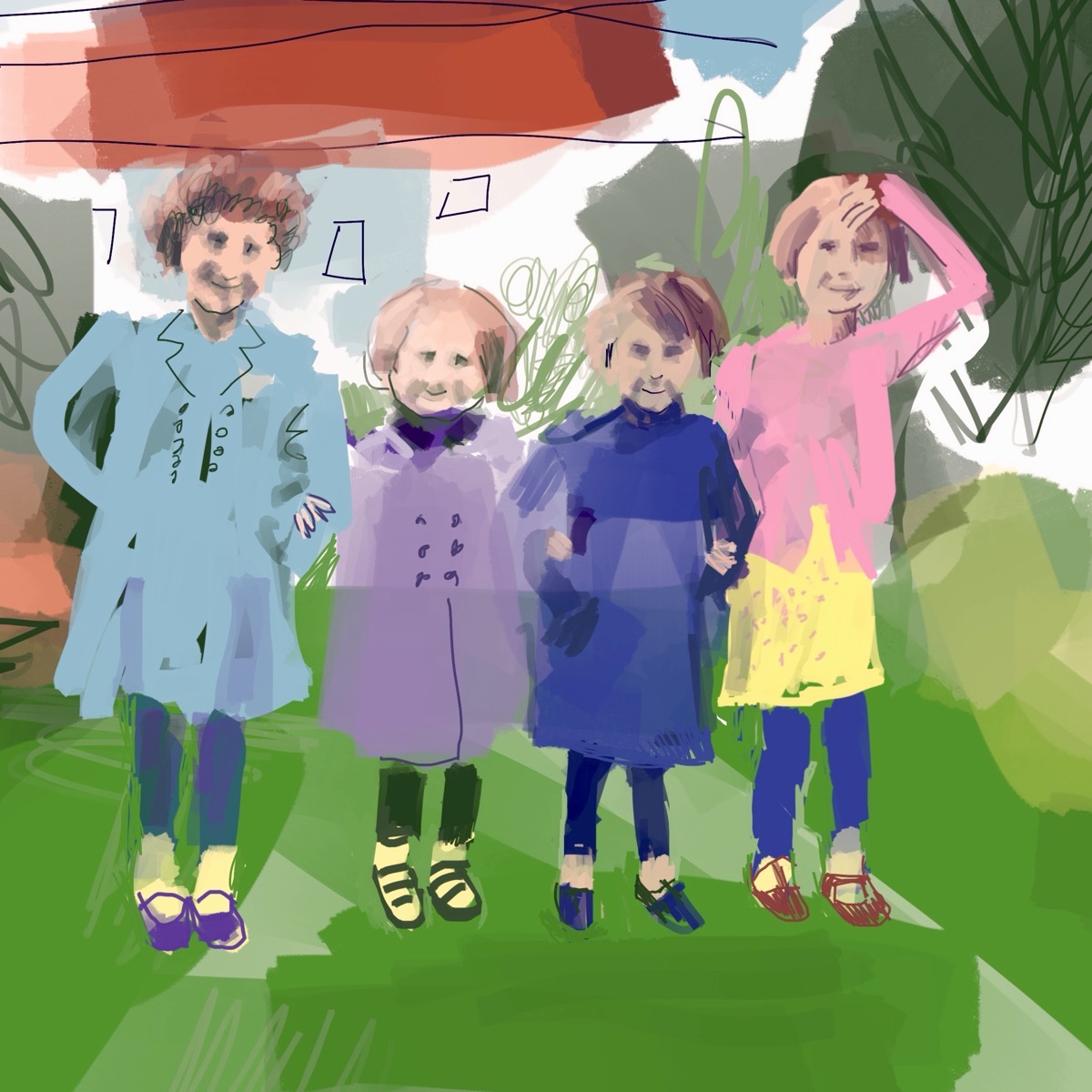
Drawn from a photo sent to me by someone who did my free photo course. Can’t promise to do that for everyone: I got carried away.
-
Mrs Barnes
Anne Barnes taught me English in the sixth form, and she had quite an effect on me.
At first I was baffled by A-level English. I couldn’t get things like Jane Austen – it all seemed so boring.
I wasn’t the only boy, but most of the class were girls, and I felt a bit clueless and left out, because they all seemed to understand the books and what was going on. But I knew I wanted to understand.
Mrs Barnes was patient with me, and she kept encouraging me to find the right books.
She told me I should read Ulysses. She said to go home and start on Friday evening and keep reading all weekend. Read and read and read, don’t spend too long on anything, keep going and get through the whole book.

And I did. Parts of it were utterly mystifying and parts were boring, but in a number of places I could see something exciting and brilliant happening. Finishing such a book, in one weekend, gave me a hell of a sense of achievement.
One day in the sixth form, in the north corridor, a boy in the year below punched me in the eye, for no reason at all – well, to amuse his friends. I was shocked, and of course it hurt.
I went into the English class, and Mrs Barnes was understanding, and sat with me for a while.

She knew people in the literary world, and she invited me to a party at her house. I was so shy that I walked round the block about three times before I dared ring the bell. I was only a sixth former, and these were proper grown-ups, literary journalists and authors.

I remember the Barnes family had two Dalmatians, which I thought was rather splendid.
Much later, when I started teaching public classes at the School of Life, the door opened not long after I’d begun, and it was Mrs Barnes, come to join my class.

Afterwards she told me she was impressed and that I’d done a good job.
I was so proud.
Rest in peace, Mrs Barnes.
Your memoir, by Christmas
Next week I’m sending a short email each day about Micro-Memoir, my thirty-day course for making a small illustrated book about one part of your life. The next one starts on Monday 2 November, and the emails stop when bookings close, at 9pm on Sunday 1 November.
God looking down at me
I made a little survey this week. A few questions about where you work. A handful of people answered, and I enjoyed reading their replies.
The best question turned out to be: what can you see when you look up?
One person saw “a bright light shining down from the ceiling.”
Another saw “a wall of pictures I have blu-tacked, showing among other things some dahlias, a selfie, a page on Wikipedia, a chart of parcel dimensions and weights, and photos from my shows.”
And one person saw “God looking down at me and wondering why I spend so much time doing things on my website instead of meeting people in real life.”
(Alright that was me. I should perhaps mention that this week I decided to stop using Google Forms and painstakingly created a survey function right here on my own website.)
Then I asked what was within arm’s reach. My favourite answer: “Empty coffee mug. Electric socket. Blue Snowball mic. Tons of bits of paper. Ancient iPhone. Two bells from Hong Kong. A Filofax hole-punch (little used). About ten million piles of paper on the floor.”
Two bells from Hong Kong. I want to know everything about those bells.
Asked for one thing they’d never give up, people were brief. “Thinking.” “Work.”
And asked what they’d change, the answers climbed from the domestic to the cosmic: “More hoovering.” “Tidy tidy tidy! Oh please could it be tidy.” “More peace and love, less war and hate.”
Nobody set out to write a story but every answer is the start of one. That’s what I teach on the Micro-Memoir course – noticing the small, specific thing, and trusting it to carry something bigger.
So now it’s your turn. Look up. What do you see?
Take the one-minute survey – I may share some replies, anonymously, next time.
The answers stay on my own website, which keeps nothing about you – not even your IP address – unless you choose to give an email address so I can reply. I’ll also be using surveys like this to check in with people on my November course.
You said it
I’ve been using voice notes a lot recently, and thinking about the voice note as a medium, so I was delighted to stumble on this, from an author I admire:
“I know I’ve brought this up in the past but I just want to circle back with this update: I AM ONLY GOING HARDER WITH THE VOICE MESSAGES. It is rare that a day goes by when I don’t leave or recieve a voice message for a friend and they range in length from two to twenty-seven minutes. Whole lives are being played out in this medium that is less like letter-writing and more like film or performance. Relatedly, the Voice Memo function on the iPhone now has a Copy Transcript button (ok it’s not that new, since late 2024) — so you don’t even have to look at the transcript to copy it; you just tap the button and then open your text document and paste. This is important to me because I take a lot of voice notes every day, and I have been using my notes app, Evernote, for voice recording, but the Voice Memo accuracy is so much higher it’s not even funny.“ – Miranda July
More on that soon.
Other World News In Brief
In 1985, Charles Kuralt profiled David Leopold, New York’s fastest bike messenger, for CBS News: “I don’t go slow. I don’t stop for red lights.” The video is really quite hair-raising. Twenty-five years later, CBS went back to see him. He was running a company, and worrying about his children’s safety on bikes. See NYC’s fastest bike messenger.
Also via Jason Kottke: animals caught at their least dignified, in the 2026 Comedy Wildlife Awards finalists. For copyright reasons I can’t share the pictures here, but do take a look – some of them are very funny.
November used to be National Novel Writing Month. Buttondown, where these emails are moving soon, suggests National Newsletter Writing Month instead: thirty days to make something like an email course, a pop-up newsletter or a printed zine. That link comes with bits of Steinbeck’s journal from writing The Grapes Of Wrath, which took him five months, admittedly, not one.
Housekeeping
Unoffice Hours have been wonderful recently. Half an hour on a video call, Tuesday lunchtimes UK, free, no agenda, open to absolutely anybody. Book a slot:
Unoffice Hours
Free drop-in video call. One-to-one, Tuesdays.
This arrives weekly. If that’s too often, reply and say MONTHLY and I’ll send you a monthly round-up instead.

JPF