Painstakingly Human | A kind of guide
Clear takeaways and a practical framework
The core principle
Every layer of friction is also a layer of commitment. When someone has to: receive mail → open it → type in a URL → listen to your voice, they’re demonstrating increasing interest at each step, and by the time they arrive at your personalised page, you know they care.
Remember Rachel’s decorated envelope from episode 1? She created a series of beats – anticipation, visual delight, then the main event. That’s what we’re doing here, but at another scale.
***
How to replicate this approach
How you might make your version

Step 1: Identify what you can give away
- What do you make/create that has physical presence? (book, zine, art print, sample, prototype)
- What costs you little to produce but has real perceived value?
- What represents your work authentically?

Step 2: Choose your recipients carefully
- Make a short list (5 to 10 people to start?)
- Research them enough to know why they specifically would care
- Find their postal address (often public if it’s a business)
- Quality over quantity. This only works if it’s genuinely personal
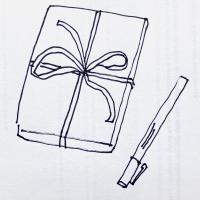
Step 3: Create the physical package
- Your “thing” (book, sample, whatever)
- Add a handwritten element (your signature, or maybe a note)
- Simple wrapping that can survive postal service
- Include the URL to their personal page

Step 4: The pre-email
- Send a brief email: “You’re about to receive…”
- Keep it short and intriguing
- No hard sell, just context
- The idea is to prime them to watch for the package, make a tiny bit of expectation.

Step 5: Build individual web pages
- Create firstname-lastname URLs on your own site
- Record a one-minute voice note for each person (mostly the same, with personal touches)
- Add transcript with strategic links to some of your other work
- Include gentle call-to-action
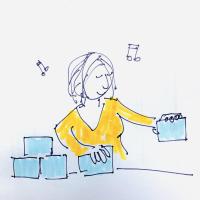
Step 6: Do it in batches
- Don’t make this a one-off torture session
- Set aside two or three hours for recording, wrapping, labelling
- Put on music, if you like to make it pleasurable1
- Notice that the friction of what you’re doing creates a kind of pleasant rhythm

Step 7: Post and wait
- Send via trackable service
- Don’t follow up immediately
- Let the package do its work
- When they visit their page, you’ll know they’re genuinely interested
***
What this approach gives you (that LinkedIn DMs don’t)
Pre-qualified interest
By the time someone contacts you, they’re already definitely invested.
Memorable distinctiveness
You’re the one who sent the thing. It’s not just another LinkedIn pitch.
Proof of humanity
Every element screams that a real person made this for you.
Your terms, your turf
Conversation happens on your website, not trapped in platform messages.
Actual pleasure
Creating these packages can be enjoyable, quite fun, slightly subversive (entertained me, anyway), unlike grinding out DMs
***
What to adjust for your situation
If you don’t have a book
Use whatever you DO make (samples, portfolios, printed case studies, or a hand-drawn explainer).
If you can’t find postal addresses
Ask. Or send to their company’s general address with “Attn: Firstname Lastname”.
If voice notes feel awkward
Write a personal letter instead, but include something that proves it’s really from you. And I think if it feels awkward that’s a good sign.
If you’re on a budget
Even a postcard with a QR code to your personalised page works. But you don’t need a QR code because the URL has their name in it.
If you’re not selling services
Same approach works for collaborations, partnerships, gallery representation, speaking gigs and all kinds of other things.
***
The real takeaway
This isn’t about being inefficient for the sake of it. It’s about creating a series of small events in someone’s day – opening mail, or physical post, hearing your voice, clicking links – that add up to a relationship beginning.
Social media collapses everything into one frictionless moment. But humans don’t work that way. We need time, texture, and proof that someone actually sees us.
The “inefficiency” is the point. It says: “I spent two hours on ten people, not two seconds on 10,000 people.”
And that changes everything.
-

JPF