How to build a Micro-Memoir from Instagram (1/2): The paper prototype
A scissors-and-paste route to your first micro-memoir
It’s a wonderful thing to realise that a micro-memoir can be built around a set of pictures, with text added as a kind of garnish.
You might already have the backbone of some kind of micro-memoir hidden in your Instagram feed – or someone else’s. But you might not realise, because social media posts go up as and when, without any meaningful order. They’re a river flowing past.
If you lift a handful out of the river and lay them on a table, you can begin to see the underlying story.
I was prompted to think about this a while ago, when my wife Harriet asked me to help her think about the sequence of various stories. I love to play around with the sequence of stories.
You can go chronological, of course. Or you could think instead about mood. A sequence that moves from sad to funny has one effect on a reader. The same images in the opposite order – funny to sad – tell a completely different story.
Today, we’ll make a physical prototype – a scissors-and-paste booklet you can hold in your hands. In the next post, we’ll build a digital version as a PDF.
Why both? Because doing the physical version first, and then redoing the same work digitally, forces you to think twice about your sequence. You’ll discover things in the rearranging that you’d never spot from a single pass.
***
Your Step-by-Step Process
Step 1: Gather Your Images. Browse an Instagram account (yours or someone else’s, with permission!) and screenshot any posts on the theme you’re drawn to. Don’t worry about image quality – screenshots are fine for prototypes. Here’s an example of the kind of post I grabbed when scrolling through Harriet’s feed.
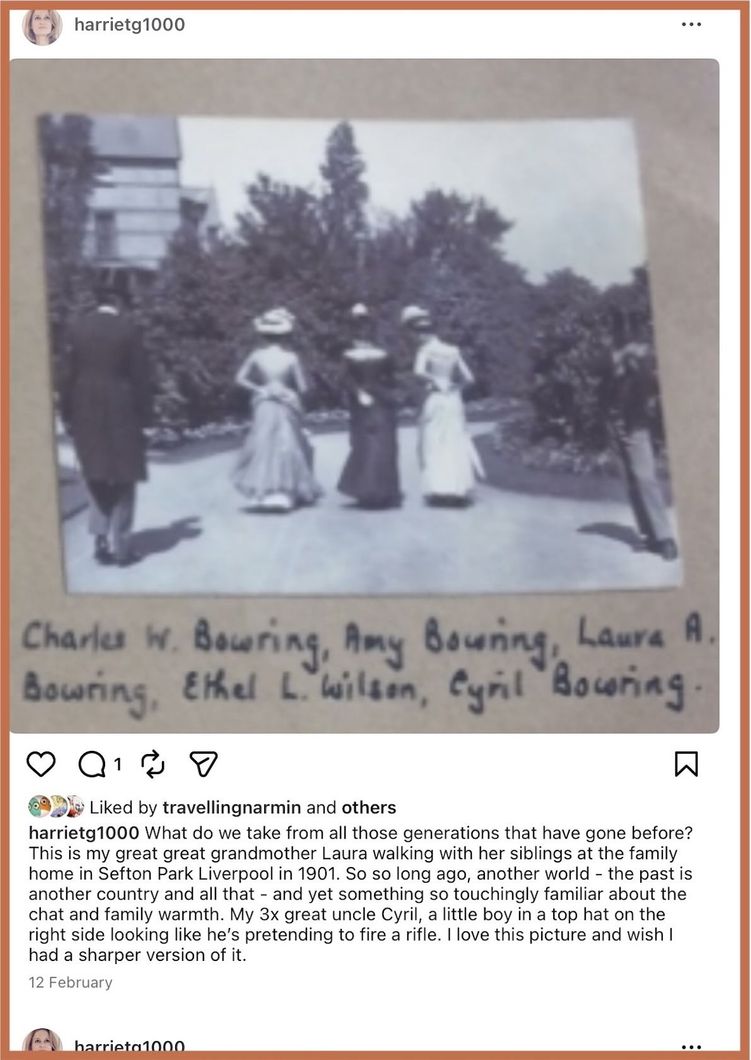
If screenshotting is new to you: on a phone, it’s usually two buttons pressed at once. On a computer, look for a “Screenshot” or “Snipping” tool. It takes about thirty seconds to learn.
Step 2: Print Them Out. Get the screenshots onto your computer however you like – whatever you already know.
Then comes a small magic trick: you don’t need any software to make a PDF. Select all the images, right-click, choose “Print,” and in the print dialogue there’s a dropdown that says “PDF” or “Save as PDF.” That turns your printer into a PDF maker without using any ink. While you’re in that dialogue, find the option called “pages per sheet” (or “multiple”) and set it to 9 – shown here.
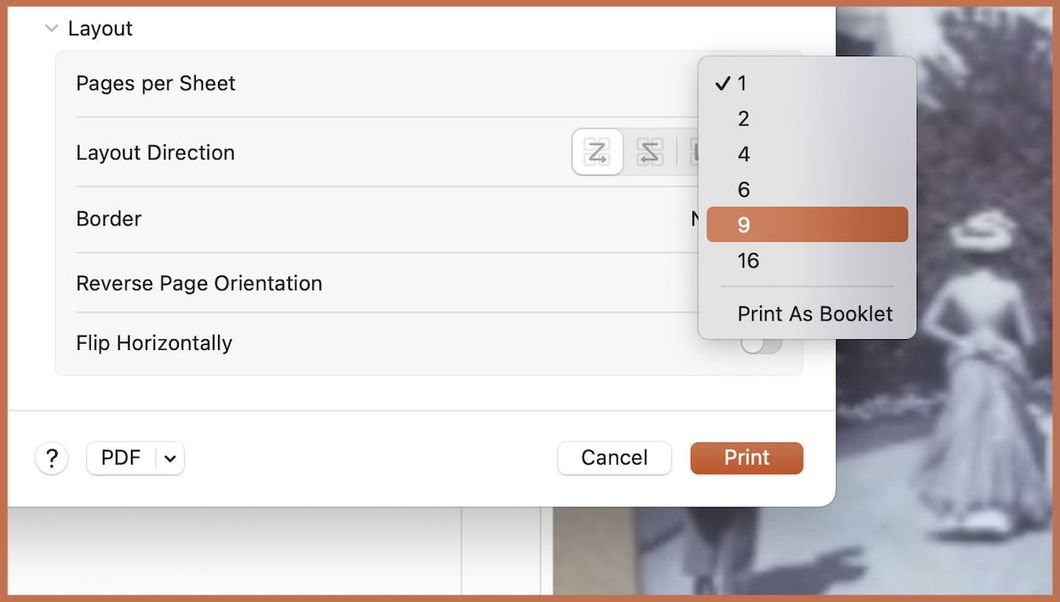
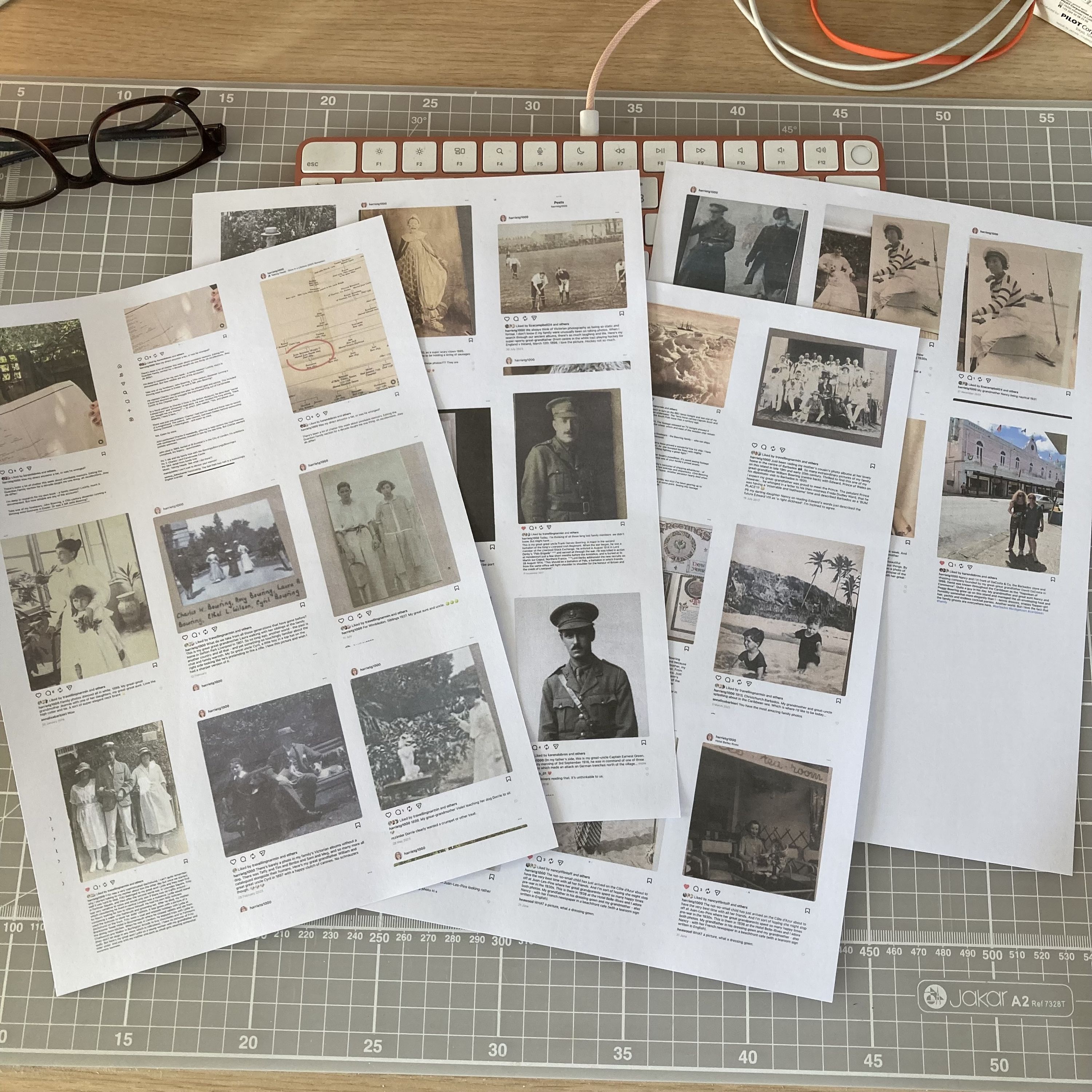
Now Print. Out come sheets with 9 little images each.
Step 3: Make the Booklet. Cut out each image with scissors. Then stack a few sheets of paper, fold them in half – that’s your booklet. Arrange the cut-outs on a table until something starts to feel right, then glue or tape them in.
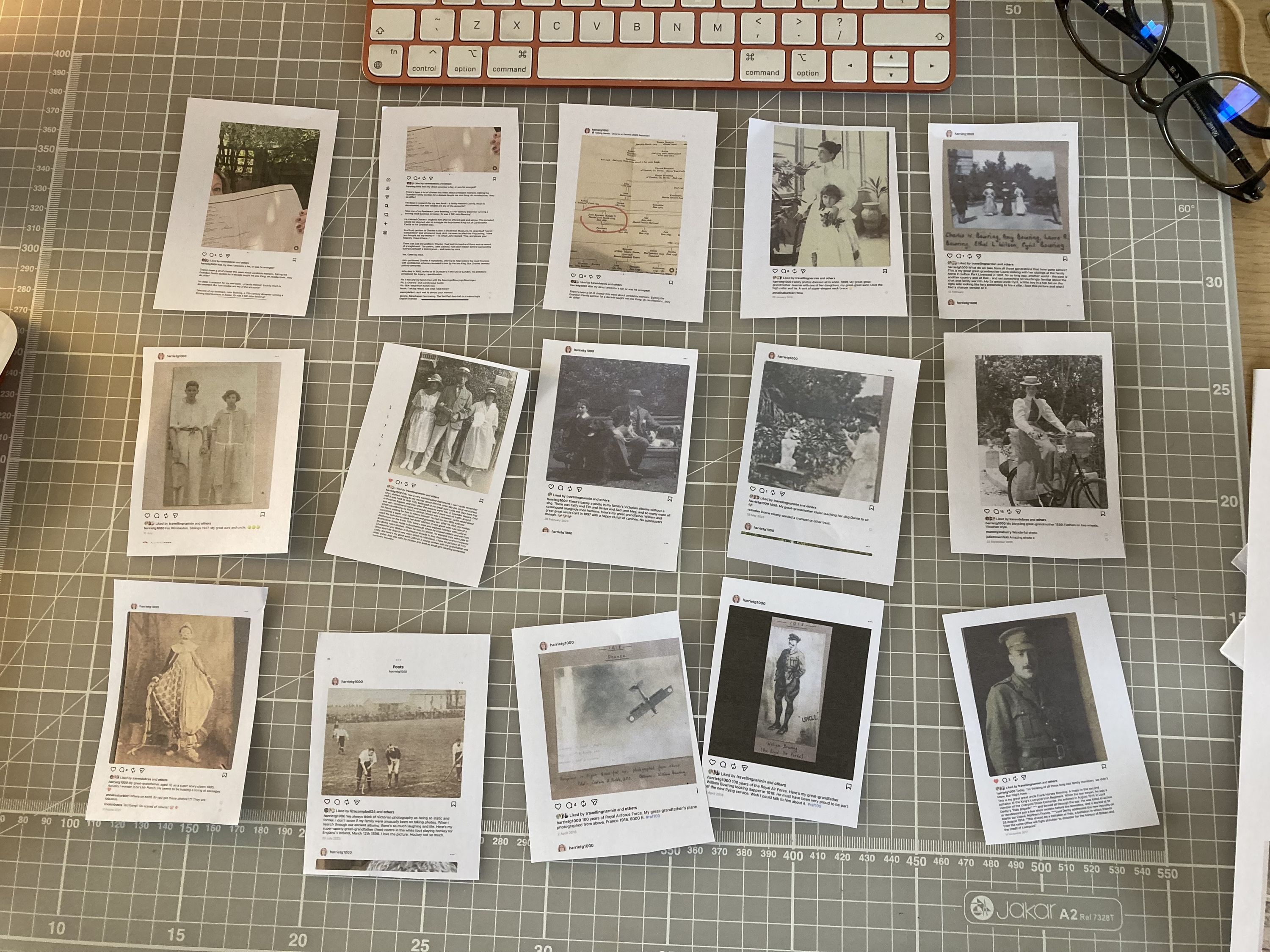
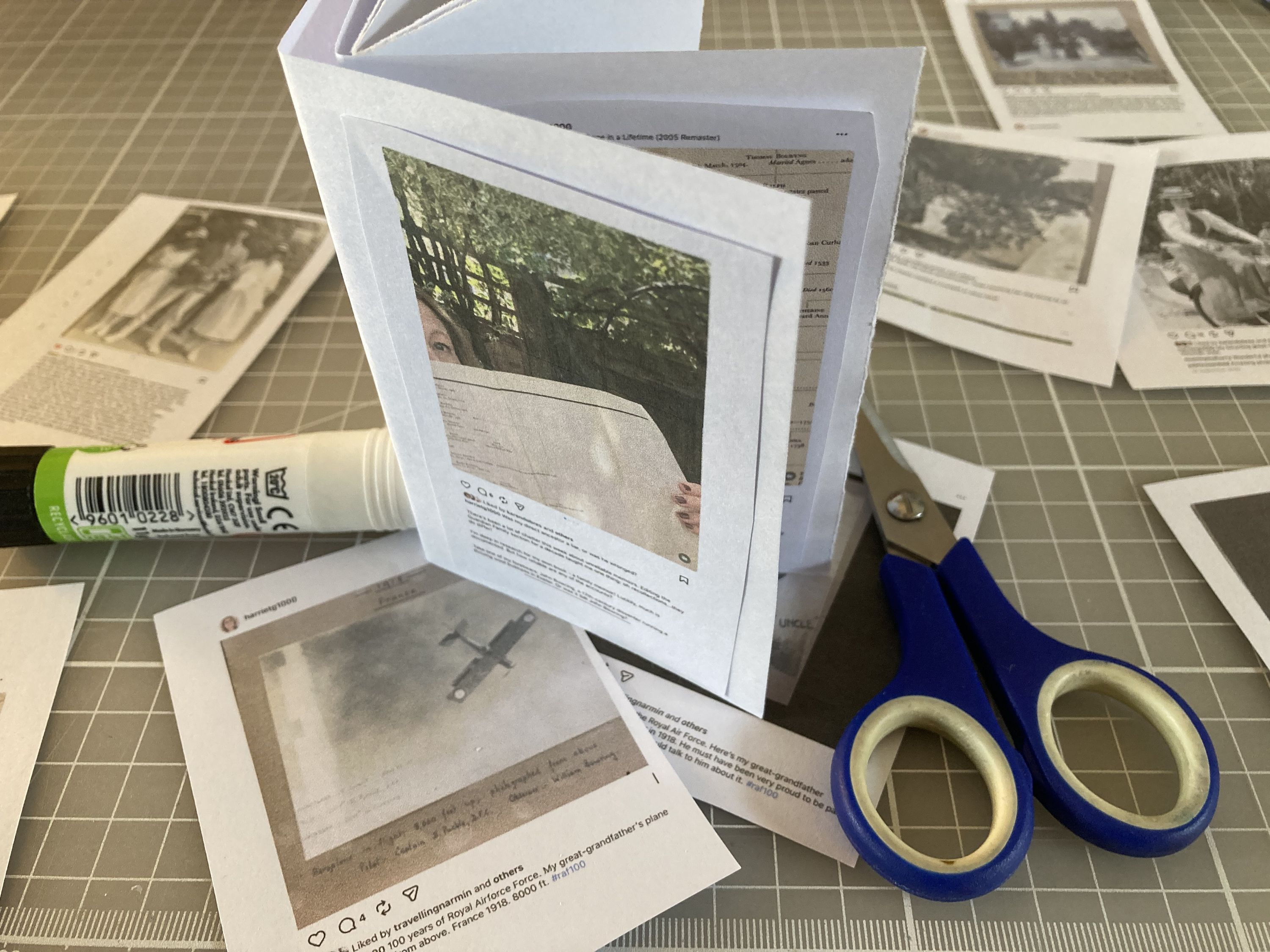
This is the bit that matters. Move things around. Live with one arrangement for a few minutes, then try another. Try chronological. Then try ending where you began. Try opening with the funniest image, or the saddest. Notice which images want to sit next to each other, which one wants to open the story, which one wants to close it.
***
Questions You Might Have
Won’t screenshots look terrible in a printed book? For a prototype, they’re fine. When you’re ready for the final version, you can return to the originals.
What if I don’t use Instagram? This works with any collection of digital images – your camera roll, scanned family photographs, Facebook, pictures from a work project.
What about the text in the Instagram posts? For prototypes, leave it in. For final books, extract it and place it on separate pages so the photos can breathe.
***
ACTION ITEM
Gather 10-15 images that hint at a story – from Instagram (with permission), from your camera roll, from wherever. Print them, cut them out, and try at least three different sequences before you glue anything down.
By the end, you’ll have something you can hold.
Tomorrow, we’ll take the same images and assemble them digitally – and you may be surprised how differently the sequence reads on a screen.
1 Micro-memoir: not a whole life story but a compelling fragment.
This is the kind of thing I teach in my Micro-Memoir course.

JPF