10 October 2026
Hello
This is the first of the Saturday issues I promised last week.
If weekly is more than you want, reply MONTHLY and I’ll send you a monthly round-up instead.
In this issue: chopping up a fat book, and a free three-day exercise for finding the story in your photos.

Here in north London, autumn is just arriving.
-
Chopping up books
4 October 2026, 11:58
This could be genius, or a terrible crime.
I read something that encouraged me to chop up fat books into slim volumes, with customised covers.
As an author I felt a bit queasy about chopping up anybody’s book. But I’m also someone who:
a) fears I won’t finish fat books, and therefore too often don’t even start reading them
b) likes making books entirely from scratch by hand
c) repairs books with cracked spines and dilapidated, falling-off covers
I decided to have a go.
At Waterstones, I bought a book I’ve long liked the sound of. Jonathan Strange & Mr Norrell contains more than 800 pages.
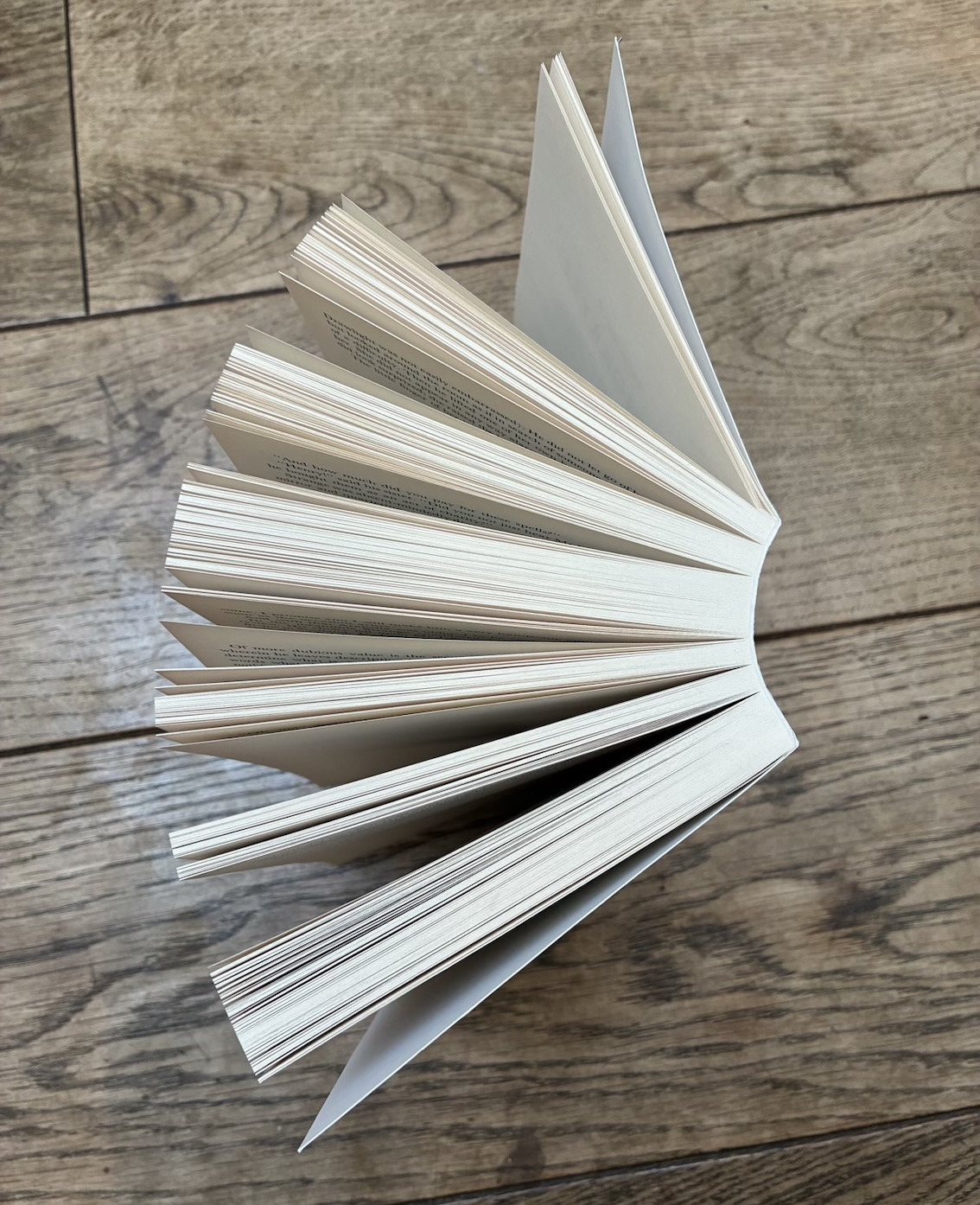
I took it home and against all my instincts I bent the spine as hard as I could in places that seemed like decent intervals:
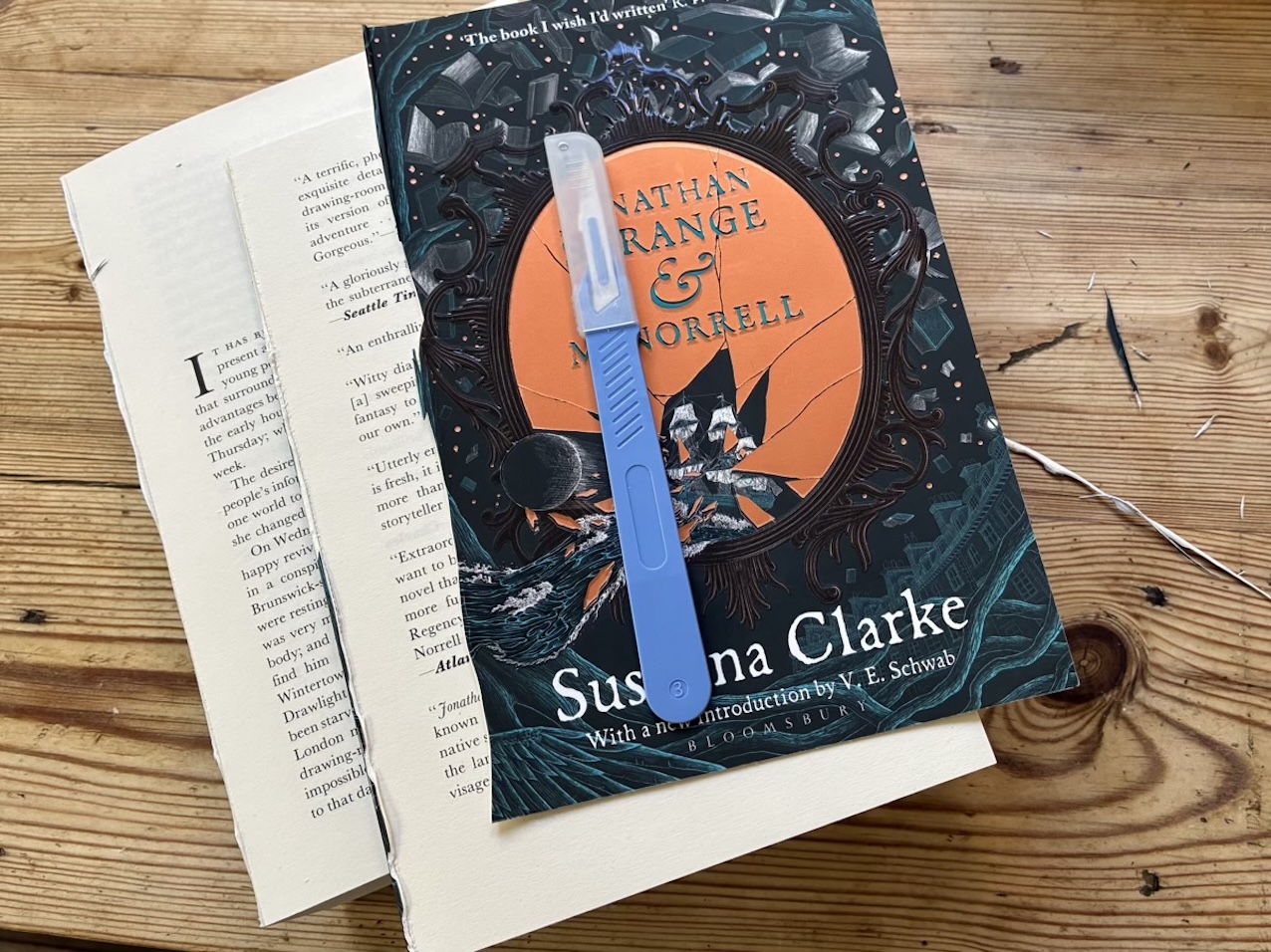
Then I took a sharp craft knife and sliced carefully through the glue binding. First, I removed the front cover, then I sliced off what will become the first slim volume.
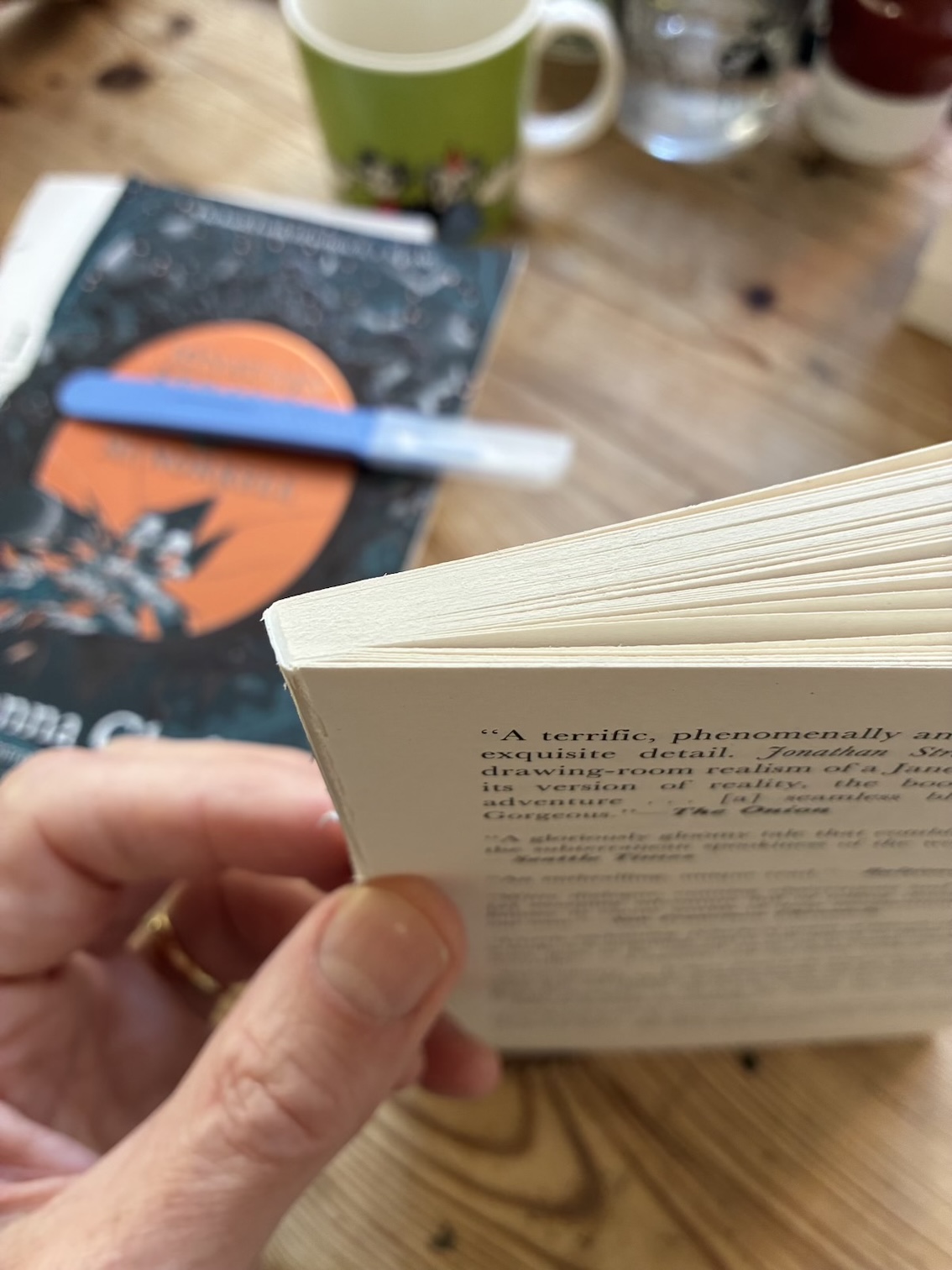
Here’s the first section, far more portable:
Next: create a new cover for it because without that it won’t hold together for long. I’m thinking some kind of heavy paper, perhaps 250gsm?
I won’t slice any more sections until I have finished reading this one. And maybe then I’ll know if it’s genius or crime.
***
Chopping up books / 2
6 October 2026, 18:13
I thought I would show how I actually covered the first part of the book that I sliced from a fat paperback yesterday.
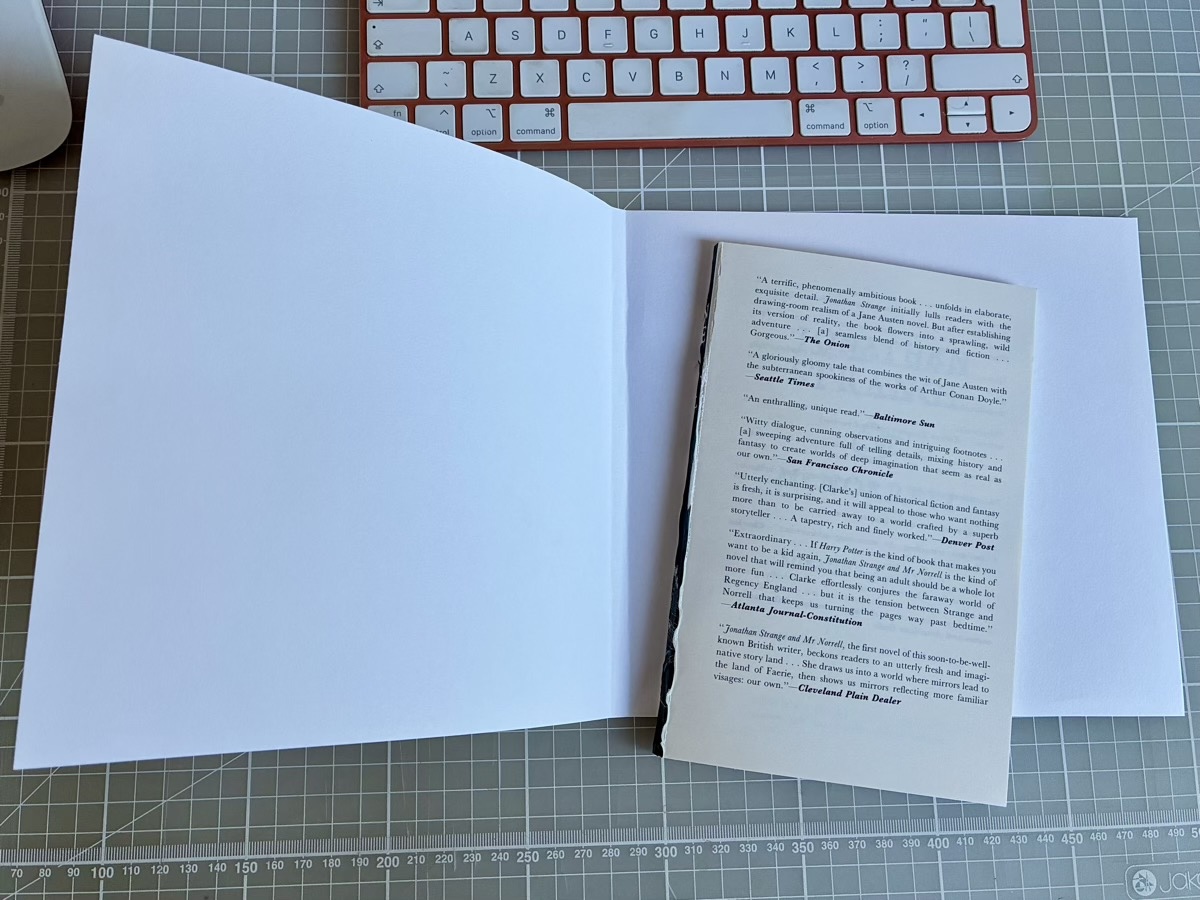
First, I cut a piece of A3 paper to produce a sheet the same size as the book, and more than long enough to wrap around the book:
Then I folded it, creasing on either side of the spine to fit it snugly:
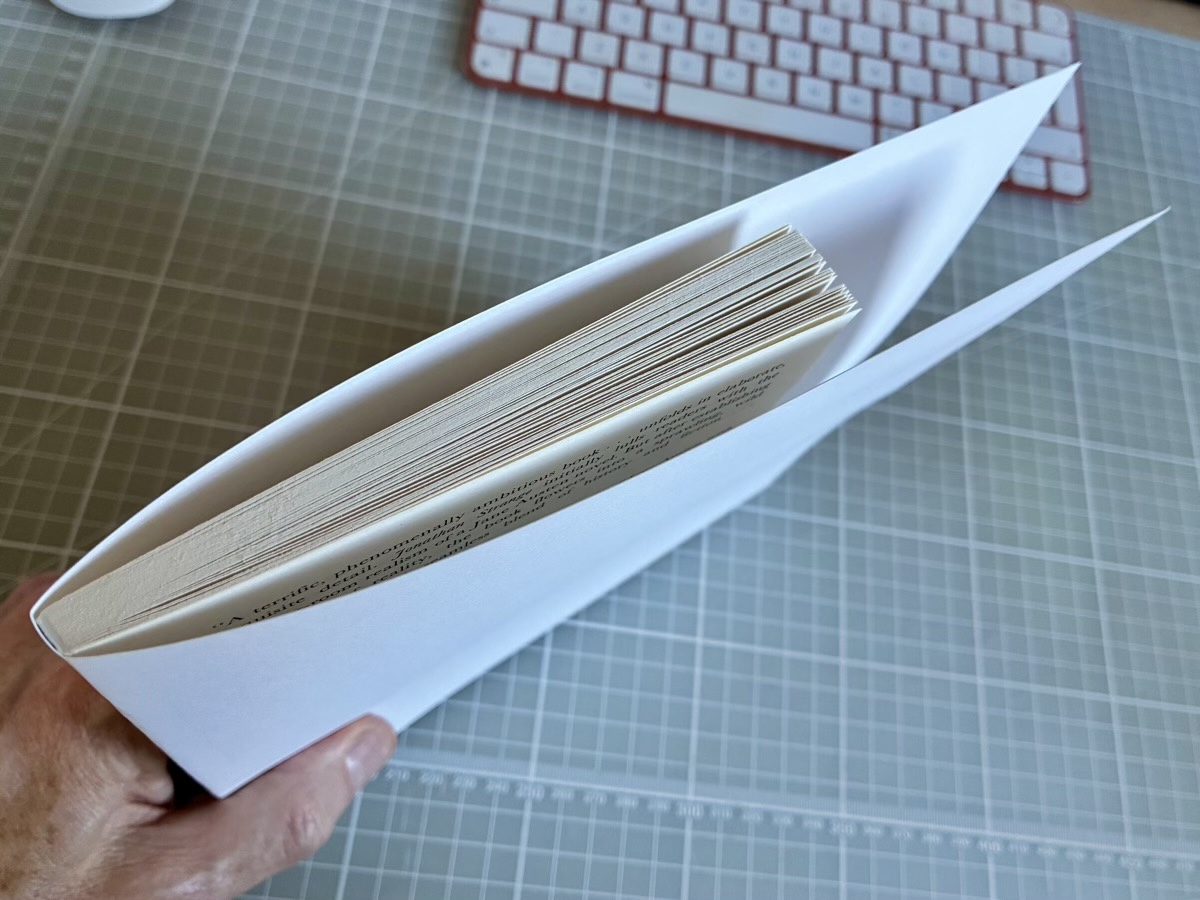
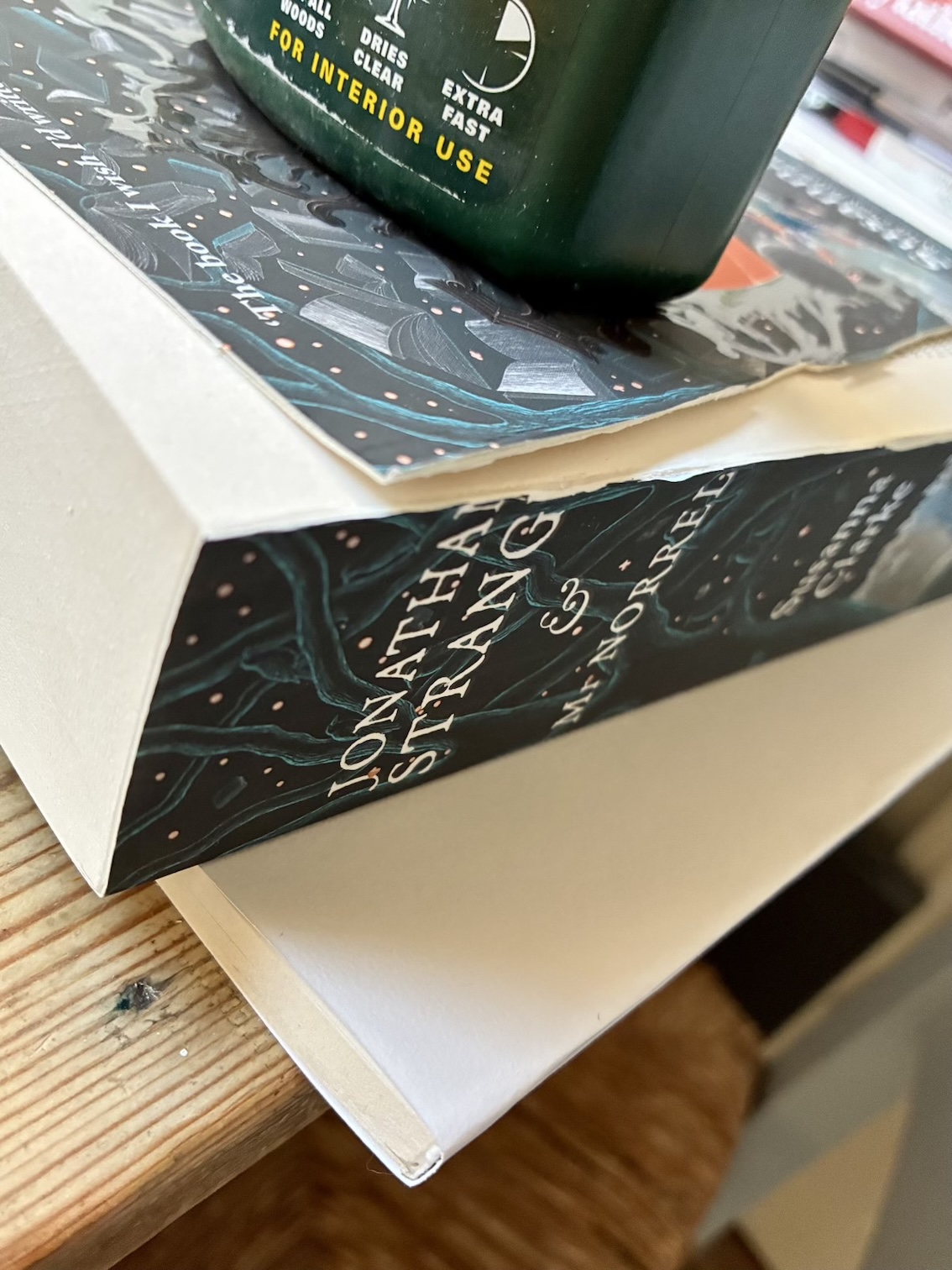
The only glue I could find was for builders to stick wood together but I thought it should be fine. I didn’t want it gloopy, so I wiped it thinly, using kitchen paper, along the edge of the spine of the book segment.
Then I placed it under the weight of the rest of the book, and the glue bottle, to dry:
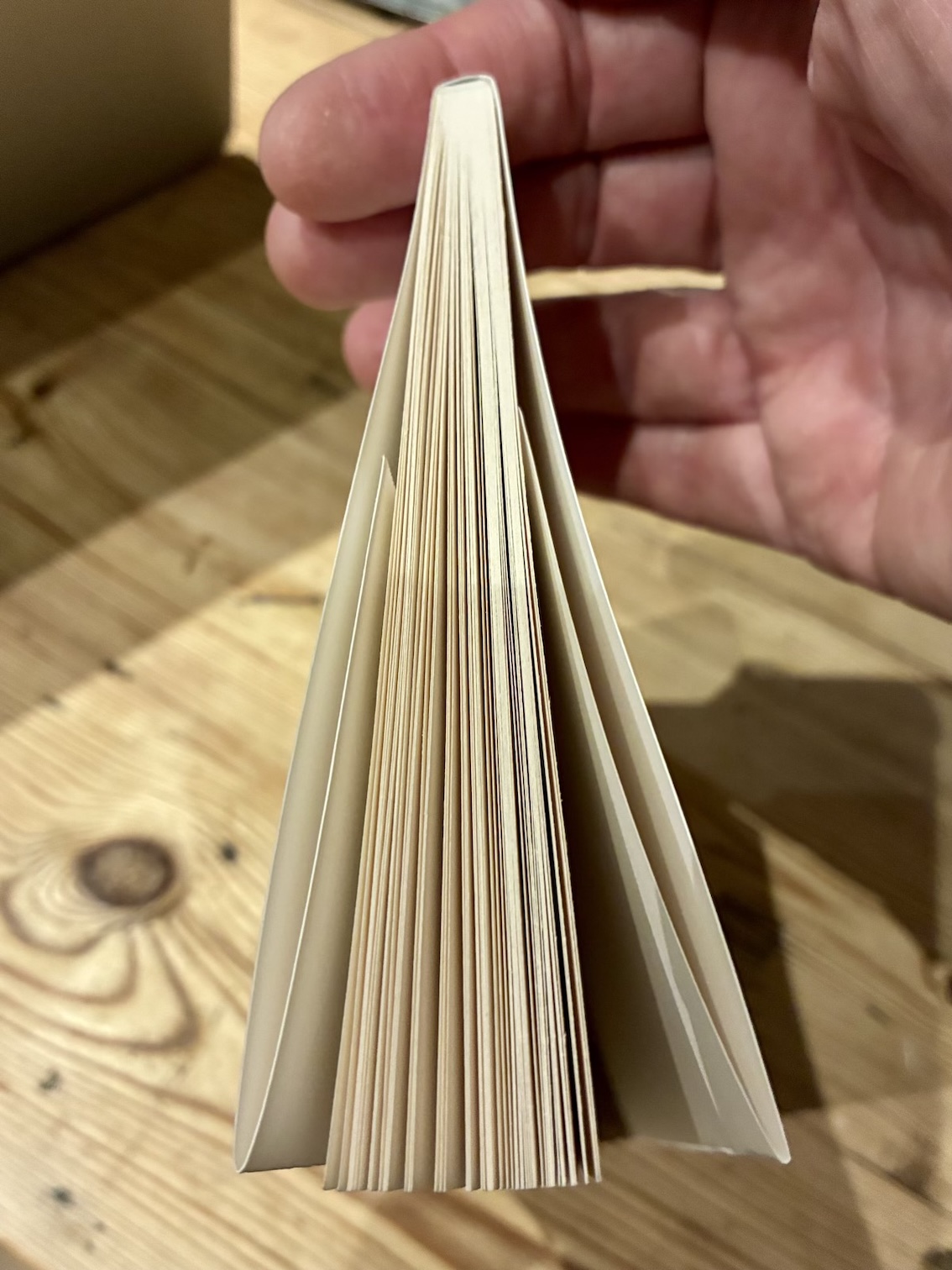
When it had dried, I folded the excess paper to create French flaps:
Last night I read half of the segment. I’m enjoying it a lot.
***
This morning I received a positive sound from H., who does not routinely applaud my various creative experiments.
She said, it actually is a good idea.
***
Chopping up books / 3
8 October 2026, 18:17
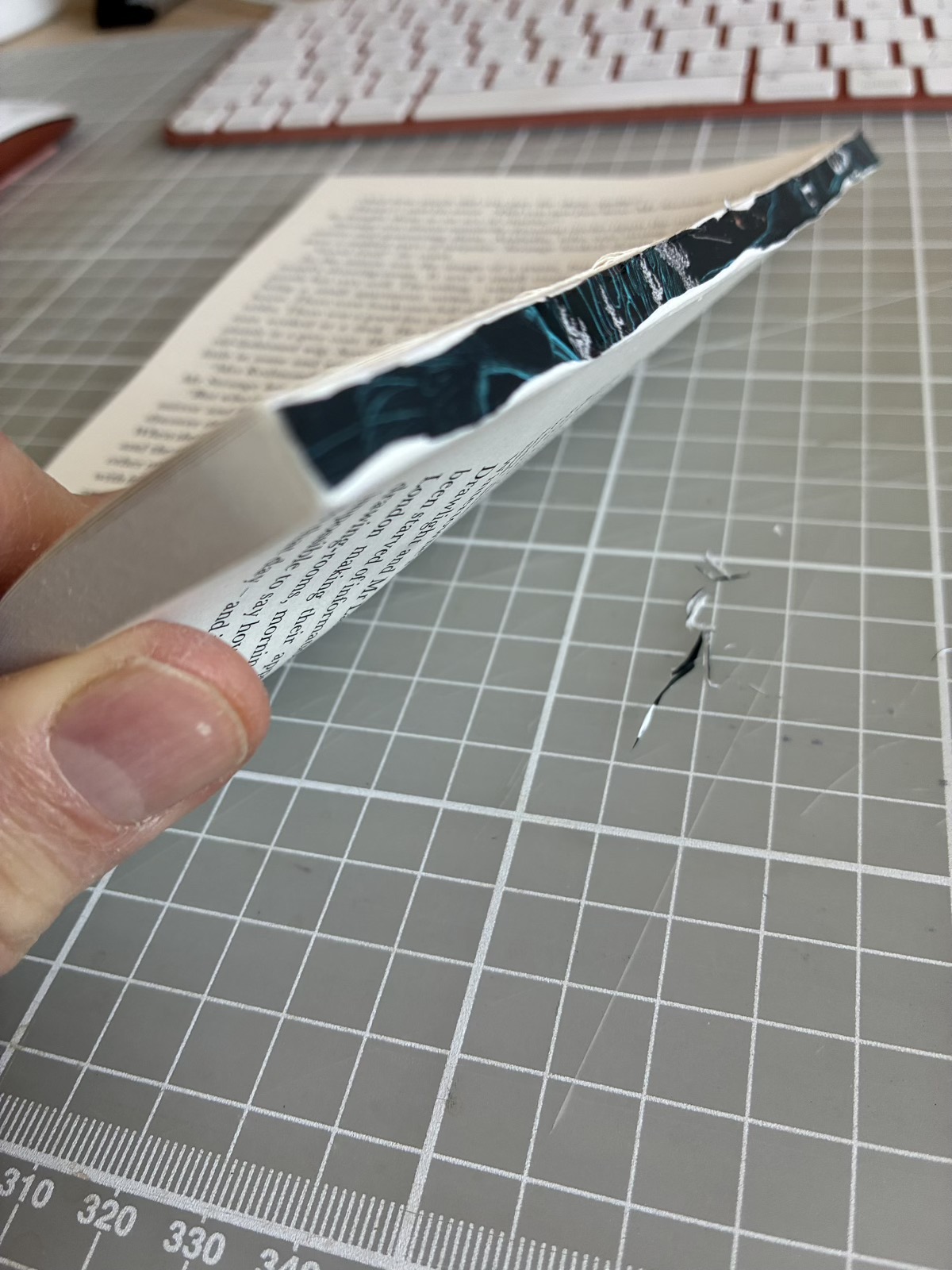
I finished reading the first segment, with great pleasure – it’s dramatic and funny too – and have now sliced off part two of what I think will be six:
Here it is, with added white wraparound cover like the other one, folded into the larger book:
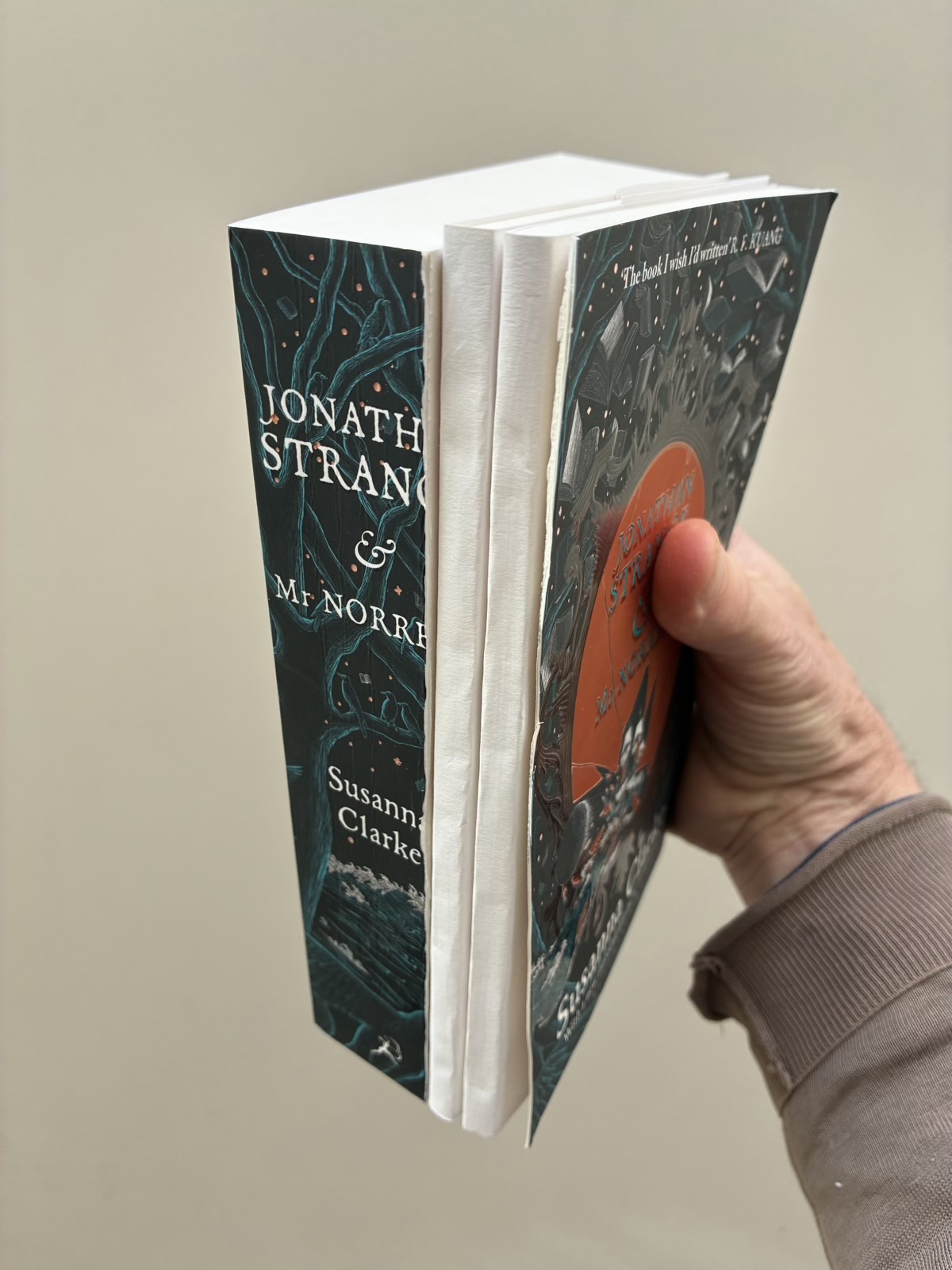
Today I showed this to an author friend who agreed that she struggles with fat books – doesn’t bother, in fact, as if to prove it she showed me one of the very slim books in her handbag.
She said what I have done is a great idea.
But she added: “I could never do that, cut up books.”
Find the story in your photos
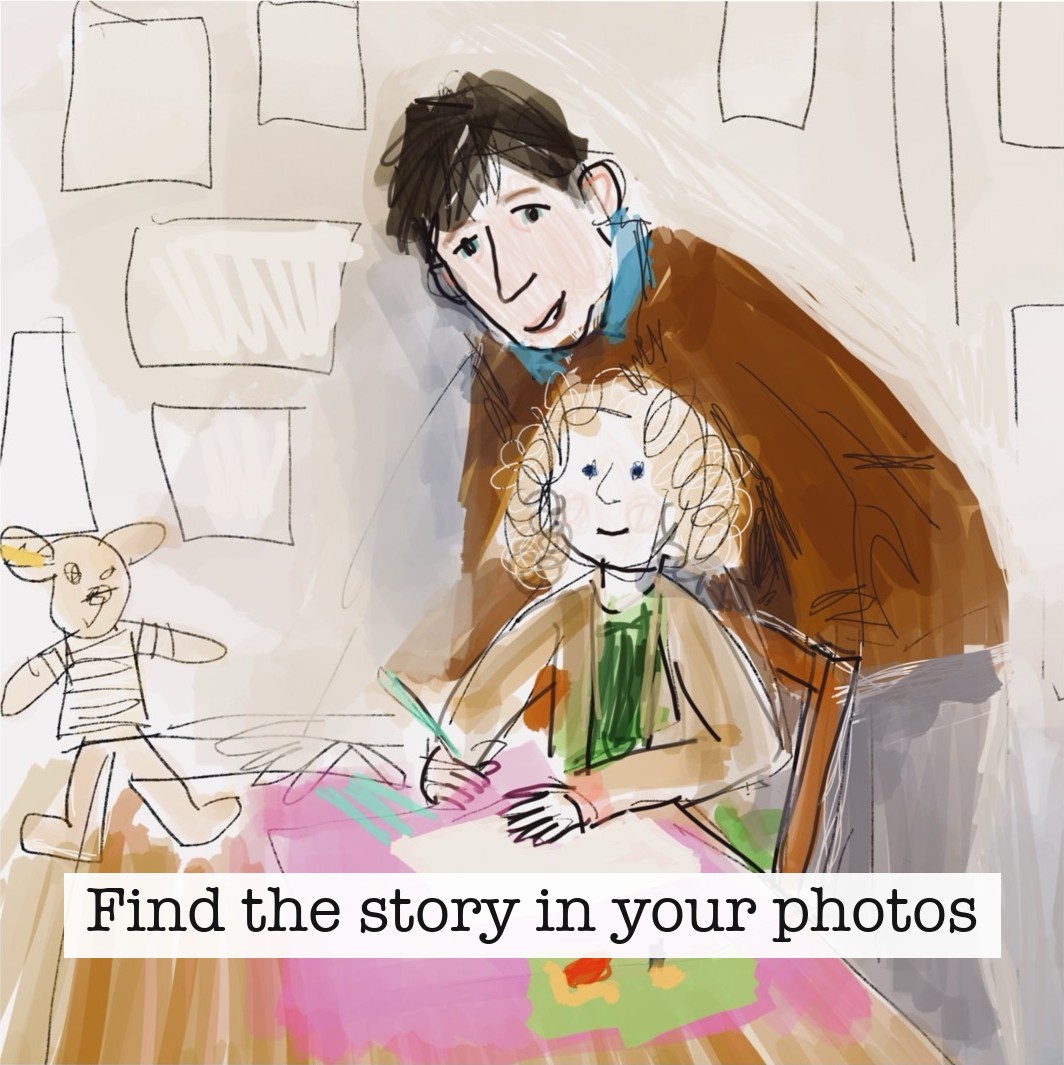
On residential writing retreats, I run an exercise that finds the story in a photograph.
First you describe a picture in so much detail that someone could draw it from your words alone. Then you draw it yourself, however scrappily. When I do this with a room full of people, they describe the same picture differently – sometimes so differently that they can’t all be right.
What each of them notices says something about the picture, and something about them.
This week I turned it into a free email course. Three days, fifteen minutes a day: a stranger’s photo, then a drawing, then a photo of your own.
It’s a taster for Micro-Memoir, my thirty-day course in making a short illustrated book about one part of your life. This week someone booked a place so she can make one as a surprise for her daughter at Christmas.
The next one starts in November – and finishes in time to get your book printed for Christmas.
Housekeeping
Unoffice Hours is now on Tuesdays: half an hour on Zoom at lunchtime UK, free, no agenda, open to absolutely anybody. Book a slot:
Unoffice Hours
Free drop-in Zoom. One-to-one, Tuesdays.

JPF