What happens when I don't know the answer [TGS Email 4/5]
⚠️ Demo for TGS
Subject: What happens when I don’t know the answer
Sender: Demo – Horacio Rocha
To: Demo Client
Date: Thursday, 26 February 2026 at 06:30
-
⚠️ Demo note: Day four. The image is Ibrahim – a real member of the network, photographed mid-conversation on a Zoom call. In the live version, this image and caption could reflect a regional variant: a network member familiar to clients in whichever part of the world.
-
Let me show you exactly what happens when one of my clients needs support across borders.
We’re talking about their expansion plans. A specific question comes up – something about regulatory requirements, or employment law, or a tax structure in a country where neither of us is the expert. In the old world, this is where things slow down. I spend hours trying to piece together reliable information from sources I can’t fully verify. Or I refer them to someone I don’t really know, and hope for the best.
That’s not what happens.
I pick up the phone. Or I get on a call like this one.
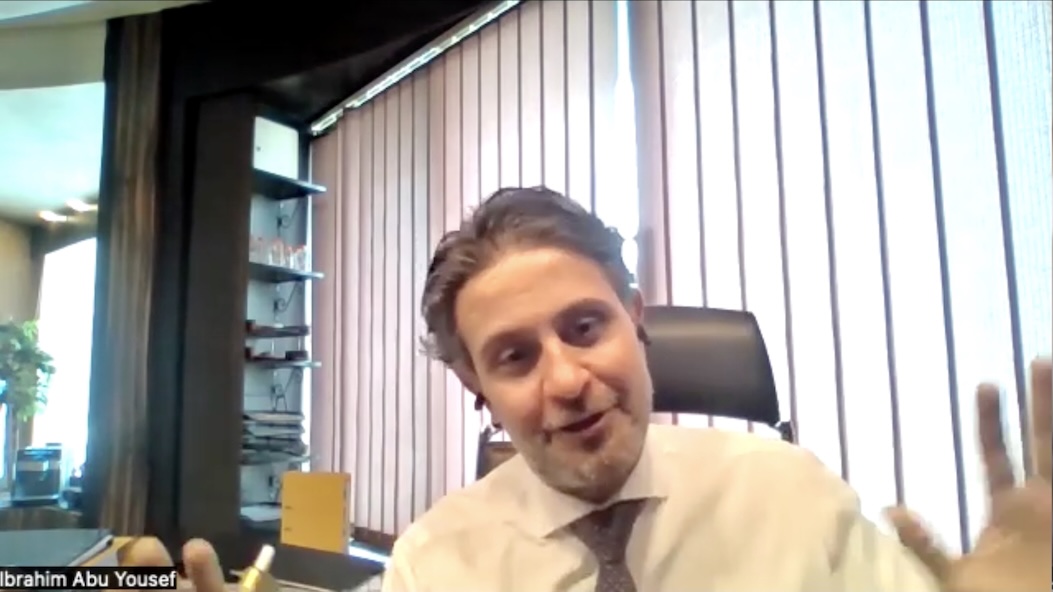
“I want my client to contact me after one or two years and say: Ibrahim, thank you so much for that contact – they gave me what I was looking for.” – Ibrahim Abu Yousef, TGS network member.
Within hours – sometimes minutes – I have a response. Not a generic answer pulled from a website. A considered response from someone who has worked inside that market, who understands the unwritten rules, who knows what the question behind my question actually is.
That colleague asks questions before they answer. They want to understand the specific situation – because their professional relationship with me depends on giving advice that actually works. There’s no “let me check with my senior manager.” The person I’m calling has the authority to make decisions and commit to approaches. The conversation happens between people who are empowered to solve your problem.
Here’s what makes this different from other referral arrangements: these are people who have watched each other work. When I vouch for a colleague, it’s not based on a brochure or a LinkedIn profile. It’s based on seeing how that person handled a difficult client situation. It’s based on technical discussions where we’ve tested each other’s thinking. It’s based on years of shared professional history.
You benefit from all of that – from the moment I make the introduction.
Meet the people I’d introduce you to →
-
If you’ve already replied with your situation or your target country, I have it. If not – it’s not too late. Just hit reply. One sentence is enough.
Tomorrow is the last email in this series. I’ll introduce you to a few of my colleagues personally – and then I’d like to suggest something practical.
Horacio Rocha San Miguel
Managing Partner, TGS Mexico