
Hunter Davies has been in this office, on the first floor of a house across Hampstead Heath from mine, since 1963. He and Margaret Forster moved in when the Beatles were just becoming famous. It has been his office ever since.
That includes: his editorship of the Sunday Times Magazine (which, he told me, came with a chauffeur and a staff of fifty), his authorised biography of the Beatles, ghosted memoirs of England footballers, and a book for which he was embedded with Tottenham Hotspur, then one of the country’s finest football teams; and many other books; and Margaret’s own writing life beside him until she died in 2016.
The room has kept everything, except what’s been given to museums.
By the window, a wall of framed football photographs. I drew those in biro and ink wash. If you know football – and have a very forgiving eye for sketchy portraiture – you will instantly recognise Wayne Rooney, Paul Gascoigne and several members of that Tottenham Hotspur side:
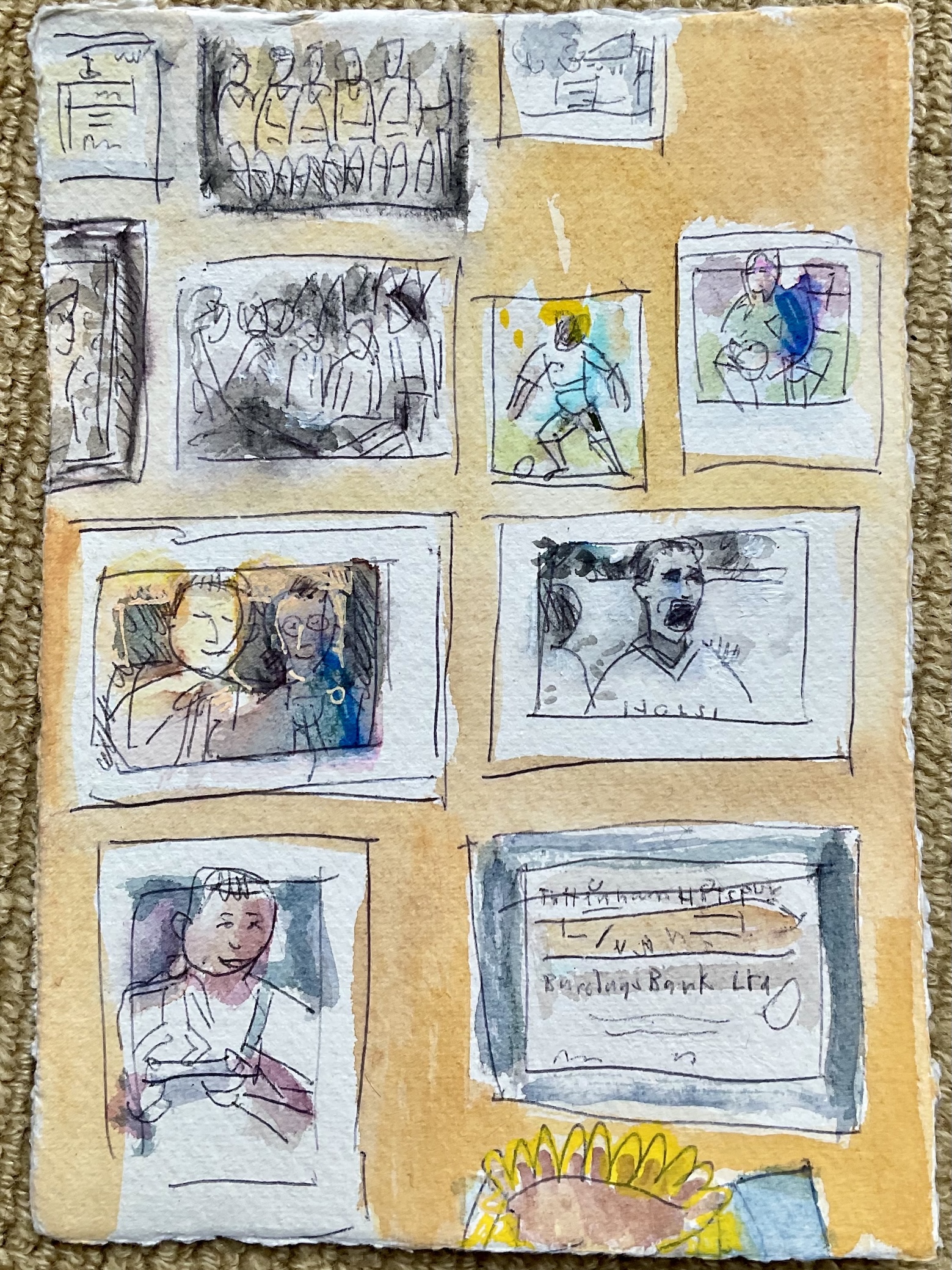
The Spurs players’ semi-nakedness has been concealed by my artistry.
On the mantelpiece, a small ceramic Beatle:
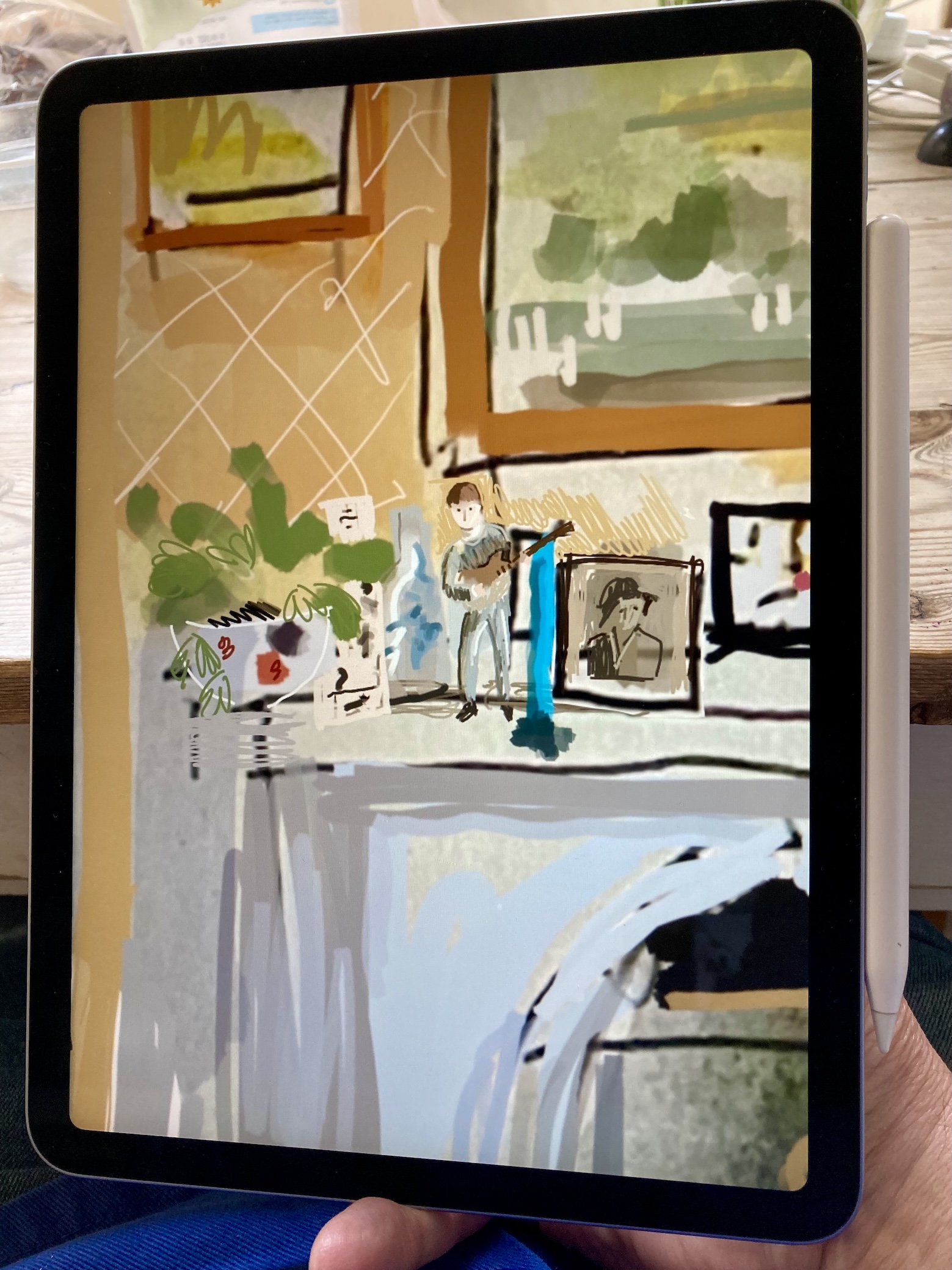
Elsewhere, a school tie from John Lennon’s school. On a shelf near the telly, a framed photograph of Margaret on the set of Georgy Girl, the 1966 film based on her novel, standing beside James Mason. On furniture beside the bit window, a photograph of the two of them by the sea, with a second photograph of Margaret tucked in behind it.
In the main picture, Hunter appears twice: at the desk on the left, reading a copy of his own biography of the Beatles; and, on the right, in the armchair where he watches football on a television mostly hidden by the computer. The working half of the room and the resting half, both his.
Having taken lots of reference photos while I was with Hunter, I also made pictures of him back at my desk:
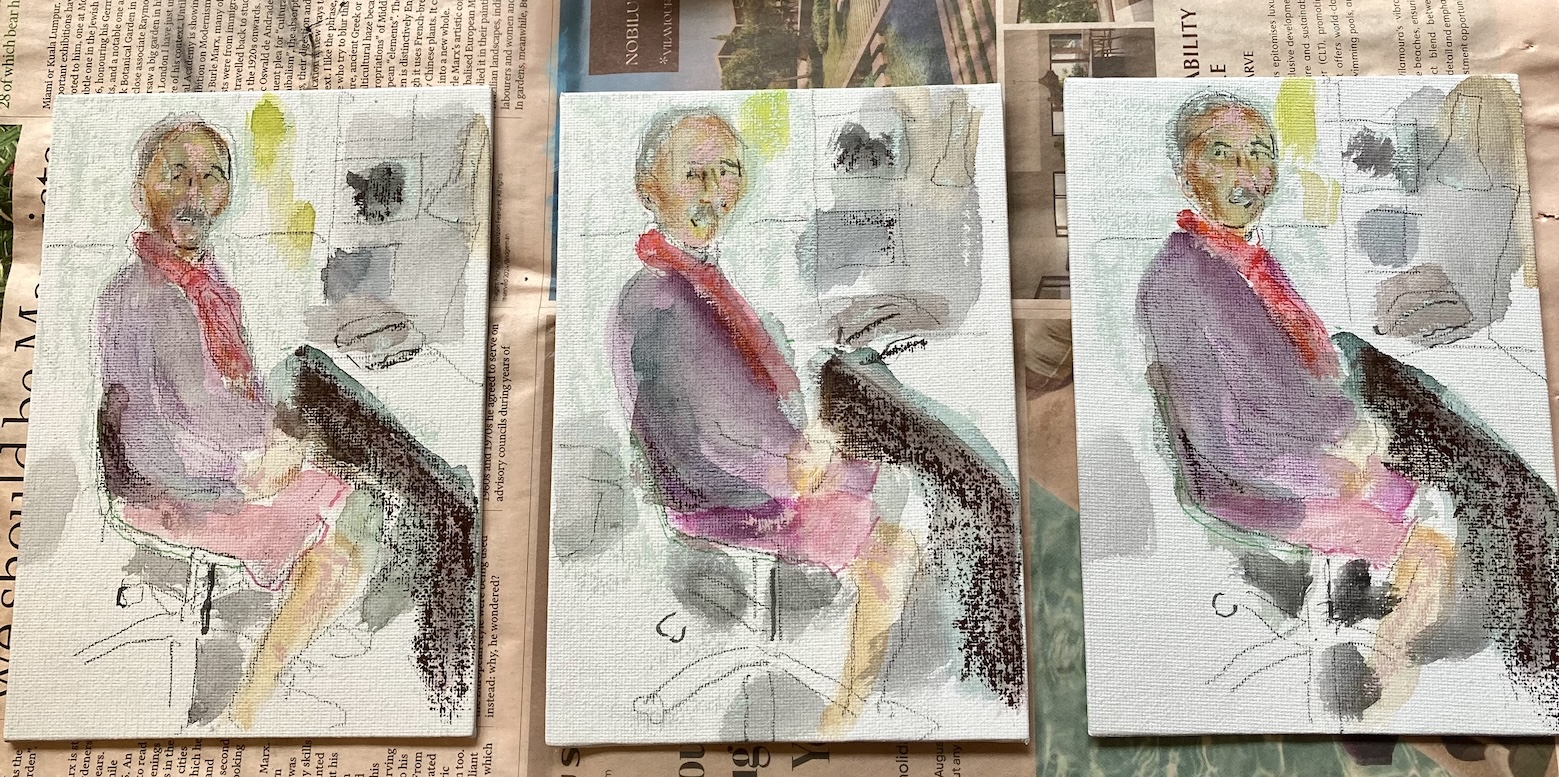
A multitude (ha!) of small mixed-media studies, on canvas board.
I read Hunter as a teenager. The Beatles book first. Later, when I was thinking about writing my own first book, Comp – about being a state school pupil myself – I read his The Creighton Report deliberately, looking for models and ideas.
Hunter belonged to a group of writers I had grown up admiring in that way you admire people from a distance: as an idea of what a life could be, more than as anyone I knew.
When I went to draw him I did not know quite what to expect, and I do not think it would help the picture to say much more about that. The room does most of the work of the portrait.
This picture had a second life at the show. I’d run out of frames, so it lay unframed on a table – and became the most talked-about thing in the room. I’ve written about that in The picture I couldn’t frame.
This is one of the portraits in Contain Multitudes, my show at Burgh House, Hampstead, 18-23 August 2026.